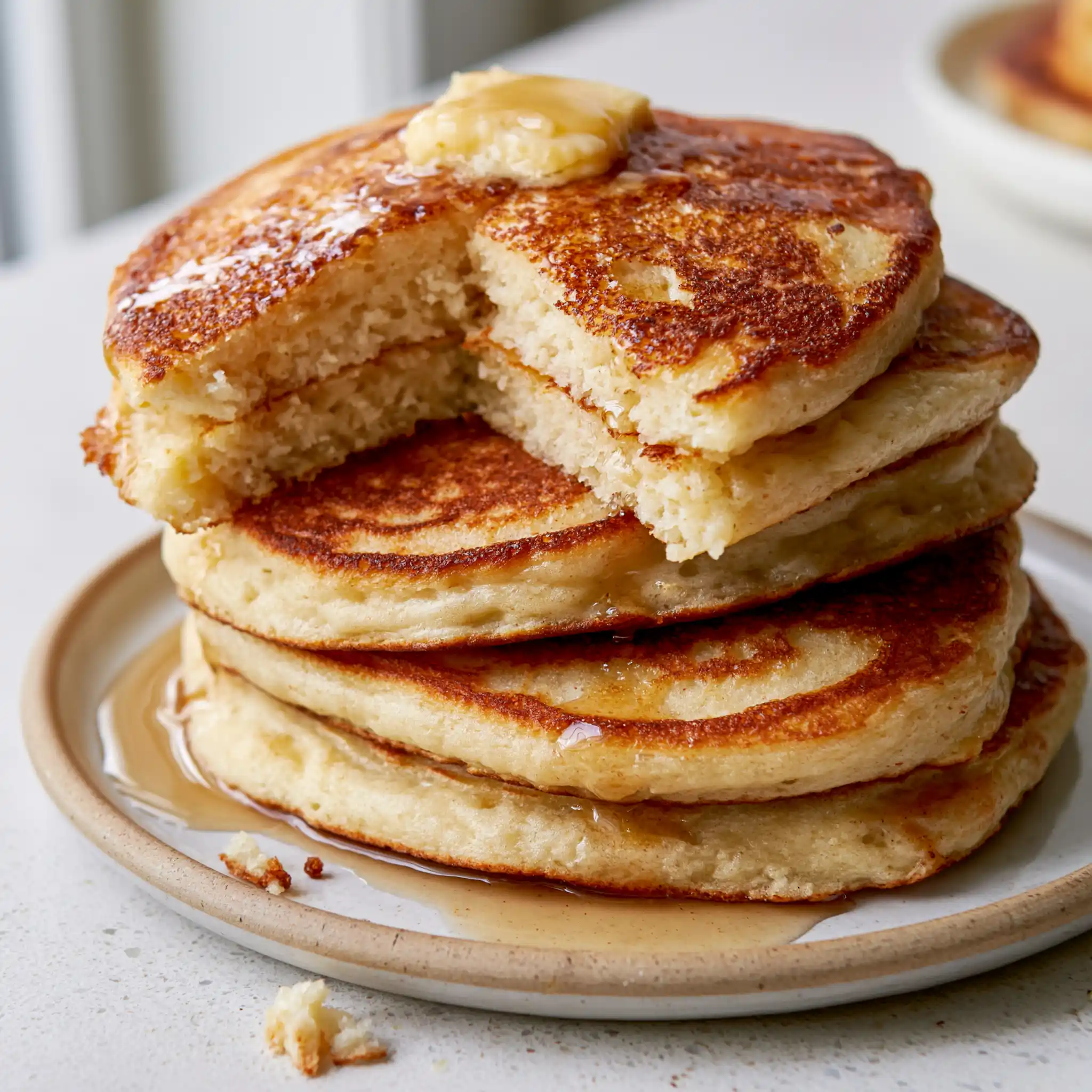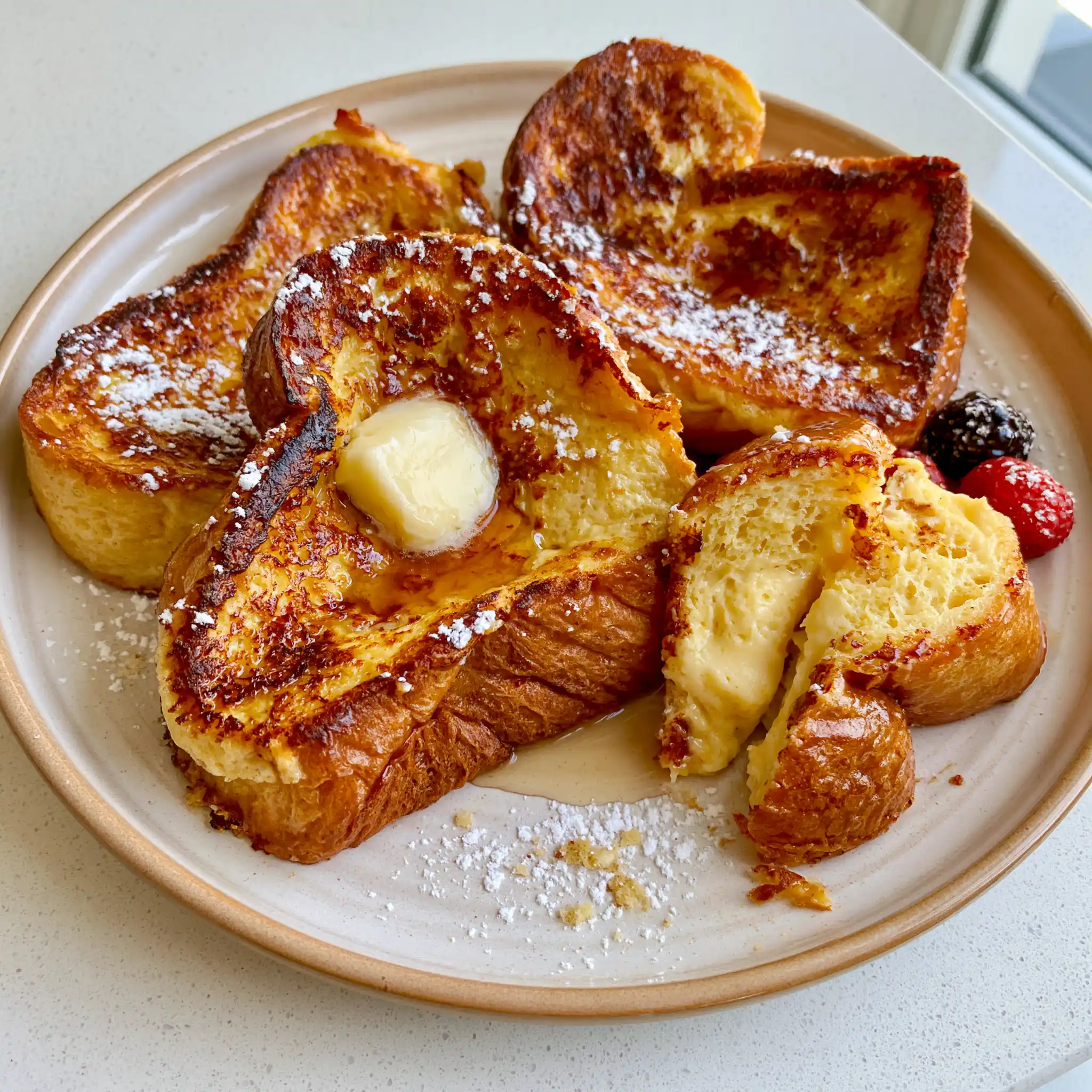
Thick slices of bread soaked in a vanilla-cinnamon custard, then cooked in butter until beautifully golden outside and soft in the center.
Classic French Toast: Quick Answer
Whisk eggs, milk, sugar, vanilla, cinnamon and salt in a wide shallow dish. Dip thick slices of slightly stale bread just long enough to absorb some custard, let the excess drip off, then cook in a lightly buttered skillet over medium heat for about 2 to 4 minutes on the first side and 2 to 3 minutes on the second. Serve warm with maple syrup, powdered sugar or fresh fruit.
“The best French toast should be golden outside, soft in the middle, and fragrant with just enough vanilla and cinnamon.”— Amelia Bennett
There is nothing quite like Classic French Toast for a cozy homemade breakfast. Thick slices of bread absorb a simple mixture of eggs, milk, vanilla and cinnamon, then cook in butter until the surfaces turn golden while the center stays soft and tender.
This timeless breakfast is quick enough for a weekday morning and special enough for a relaxed weekend brunch. The ingredient list is short, the equipment is basic and the method is easy to master once you understand how bread thickness, soaking time and skillet temperature work together.
The best results come from bread with enough structure to hold the custard. Slightly stale brioche, challah, thick-cut French bread or Texas toast all work beautifully because they absorb flavor without immediately collapsing. Even regular sandwich bread can make good French toast when dipped only briefly.
❤️ Why You’ll Love This Classic French Toast
📋 Classic French Toast at a Glance
| Preparation time | 10 minutes |
|---|---|
| Cooking time | 15 minutes |
| Total time | 25 minutes |
| Servings | 4 |
| Yield | About 8 slices |
| Difficulty | Easy |
| Best served | Warm |
| Cooking method | Skillet or griddle |
🧺 Ingredients for Classic French Toast
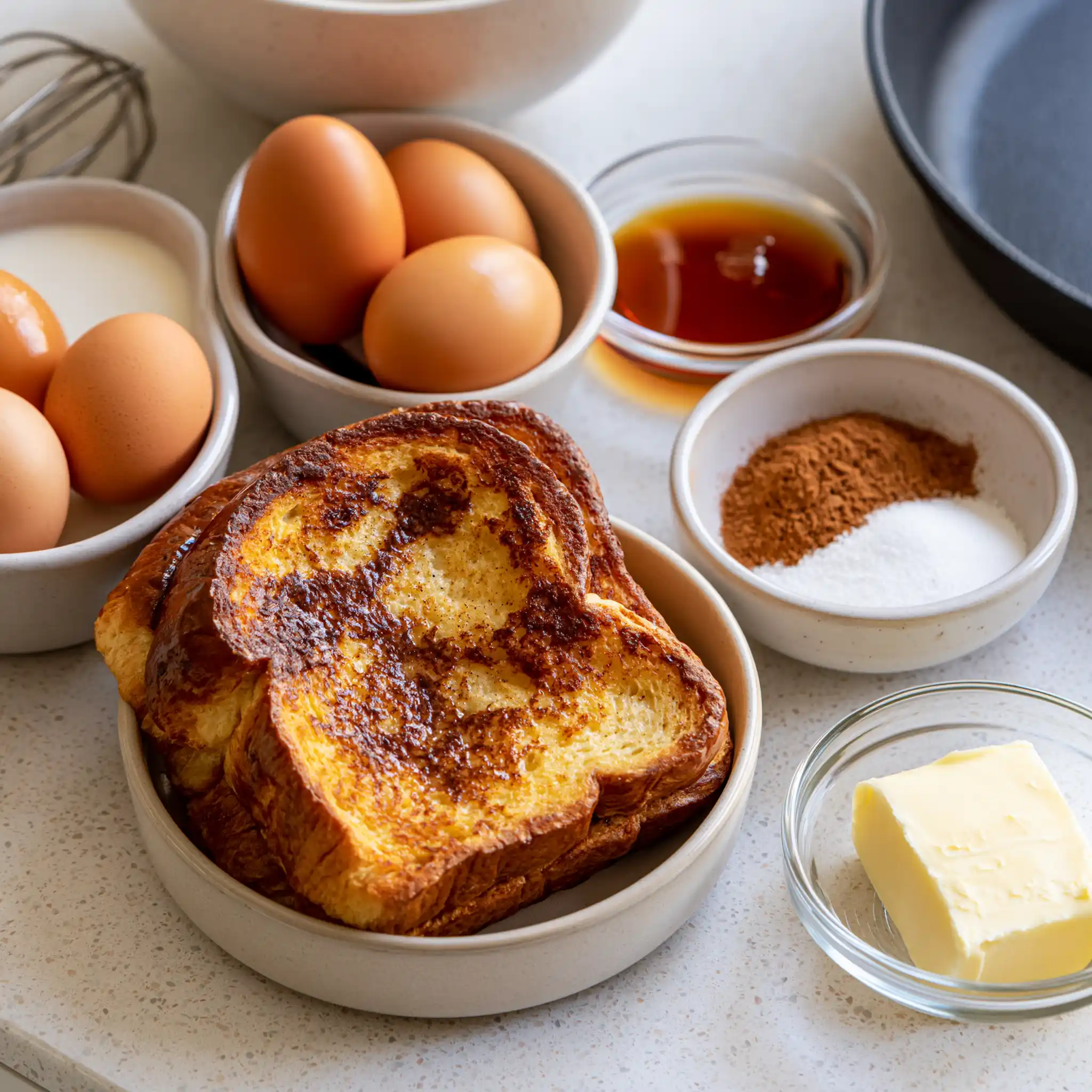
You only need a few basic ingredients. For the most consistent texture, use thick bread and measure the milk rather than estimating it.
Main Ingredients
- 8 thick slices bread
- 4 large eggs
- 1 cup whole milk
- 2 tablespoons granulated sugar
- 2 teaspoons vanilla extract
- 1 teaspoon ground cinnamon
- ¼ teaspoon salt
- 2 tablespoons unsalted butter, plus more as needed
For Serving
- Maple syrup
- Powdered sugar
- Fresh strawberries
- Blueberries or raspberries
- Sliced bananas
- Butter
- Whipped cream
- Honey or chopped nuts
🍞 What Is the Best Bread for French Toast?
Brioche
Rich, buttery and slightly sweet. Thick brioche produces a very soft center and a bakery-style result.
Challah
Tender but sturdy enough to hold the custard. It gives you a soft interior with beautifully golden edges.
French Bread
Slightly stale French bread works especially well. Cut it about ¾ to 1 inch thick so it can absorb enough custard without becoming fragile.
Texas Toast
An easy option for classic diner-style French toast. Its thickness makes soaking and flipping straightforward.
Fresh Bread vs. Day-Old Bread
Slightly stale bread is usually easier to work with because it contains less moisture and has more capacity to absorb the flavored egg mixture. Very fresh bread can become overly soft before the center has time to cook.
If your bread is extremely fresh, leave the slices uncovered briefly or dry them gently in a low oven. The goal is not to toast them crisp, only to remove a little surface moisture.
🥛 Understanding the French Toast Custard
Eggs
Eggs provide structure and richness. Too many can make the toast taste overly eggy, while too little egg can leave the coating weak.
Milk
Whole milk gives a balanced custard. You can also use 2% milk, oat milk or almond milk. Half-and-half gives a richer result.
Vanilla & Cinnamon
Vanilla adds the classic sweet aroma while cinnamon brings warmth. Whisk again between batches because cinnamon naturally floats.
Sugar & Salt
A little sugar helps browning and rounds out the custard. Salt balances the sweetness and strengthens the vanilla, cinnamon and butter flavors.
Easy Ingredient Substitutions
Whole milk can be replaced with 2% milk, lactose-free milk, unsweetened oat milk or unsweetened almond milk. Brown sugar can replace granulated sugar for a slightly deeper caramel note. A pinch of nutmeg or a little finely grated orange zest can also be added without changing the basic method.
💧 The Secret to French Toast That Is Not Soggy
Choose sturdy bread
Brioche, challah, Texas toast and thick French bread absorb custard without losing their shape.
Avoid oversoaking
Soft bread can absorb liquid in seconds. Match soaking time to the bread instead of using one timing for every loaf.
Use moderate heat
High heat darkens the outside before the center cooks. Medium or medium-low heat gives the custard time to set.
Do not overcrowd
Leave space around each slice so the pan stays hot enough to brown rather than steam the bread.
👩🍳 How to Make Classic French Toast
Classic French Toast is simple to prepare, but the best results come from controlling three things: bread thickness, soaking time and skillet heat.
1Prepare the Custard Mixture
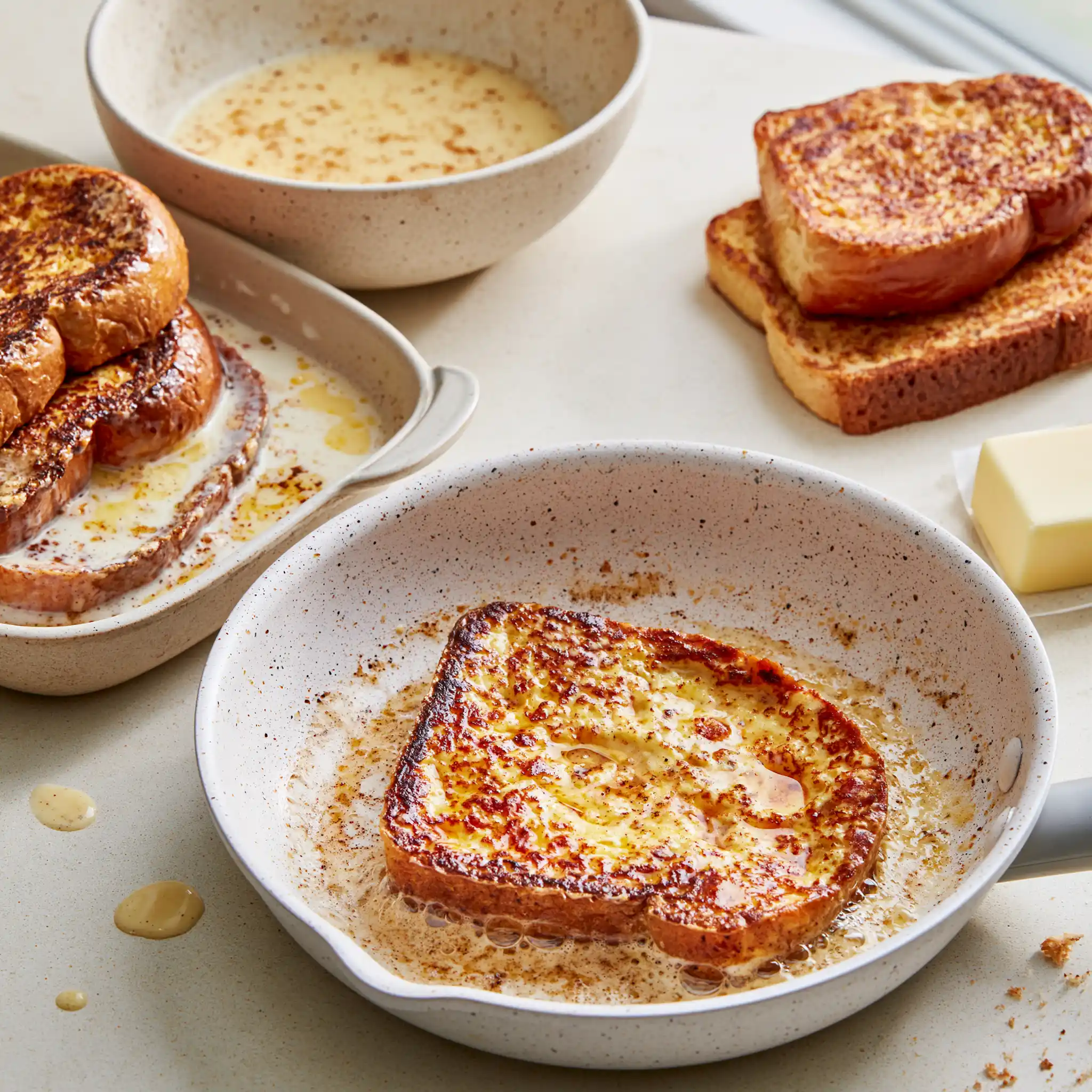
Crack the eggs into a wide shallow bowl or baking dish. Add the milk, sugar, vanilla, cinnamon and salt. Whisk until the eggs are completely blended and no large streaks of egg white remain.
Whisk again occasionally while dipping because cinnamon naturally collects on the surface.
2Prepare the Bread
Arrange the bread slices near your cooking area. Slightly stale bread is ideal. If you are using very fresh brioche, challah or another soft loaf, handle the slices gently and shorten the soaking time.
3Preheat the Skillet
Place a large nonstick skillet or griddle over medium heat. Let it warm, then add about ½ tablespoon of butter and allow it to melt across the surface.
The butter should foam gently. If it immediately turns dark, lower the heat before adding the bread.
4Soak the Bread
For thick brioche or challah, soak about 10 to 15 seconds per side. Dense French bread may need roughly 15 to 20 seconds per side. Thin sandwich bread usually needs only a quick dip of a few seconds.
The bread should absorb custard but remain strong enough to lift easily. Let the excess drip back into the dish before moving the slice to the skillet.
5Cook Until Golden
Place the soaked bread in the hot buttered skillet without crowding. Cook most thick slices for about 2 to 4 minutes on the first side, until evenly golden.
Flip carefully with a wide spatula and cook the second side for another 2 to 3 minutes. The center should feel soft but not wet.
6Repeat and Serve
Transfer cooked slices to a plate or keep them warm on a wire rack in a 200°F / 95°C oven while you finish the remaining batches. Add small amounts of fresh butter to the skillet as needed.
Serve warm with maple syrup, powdered sugar, berries, bananas, butter or your favorite toppings.
⭐ How to Get Golden French Toast Every Time
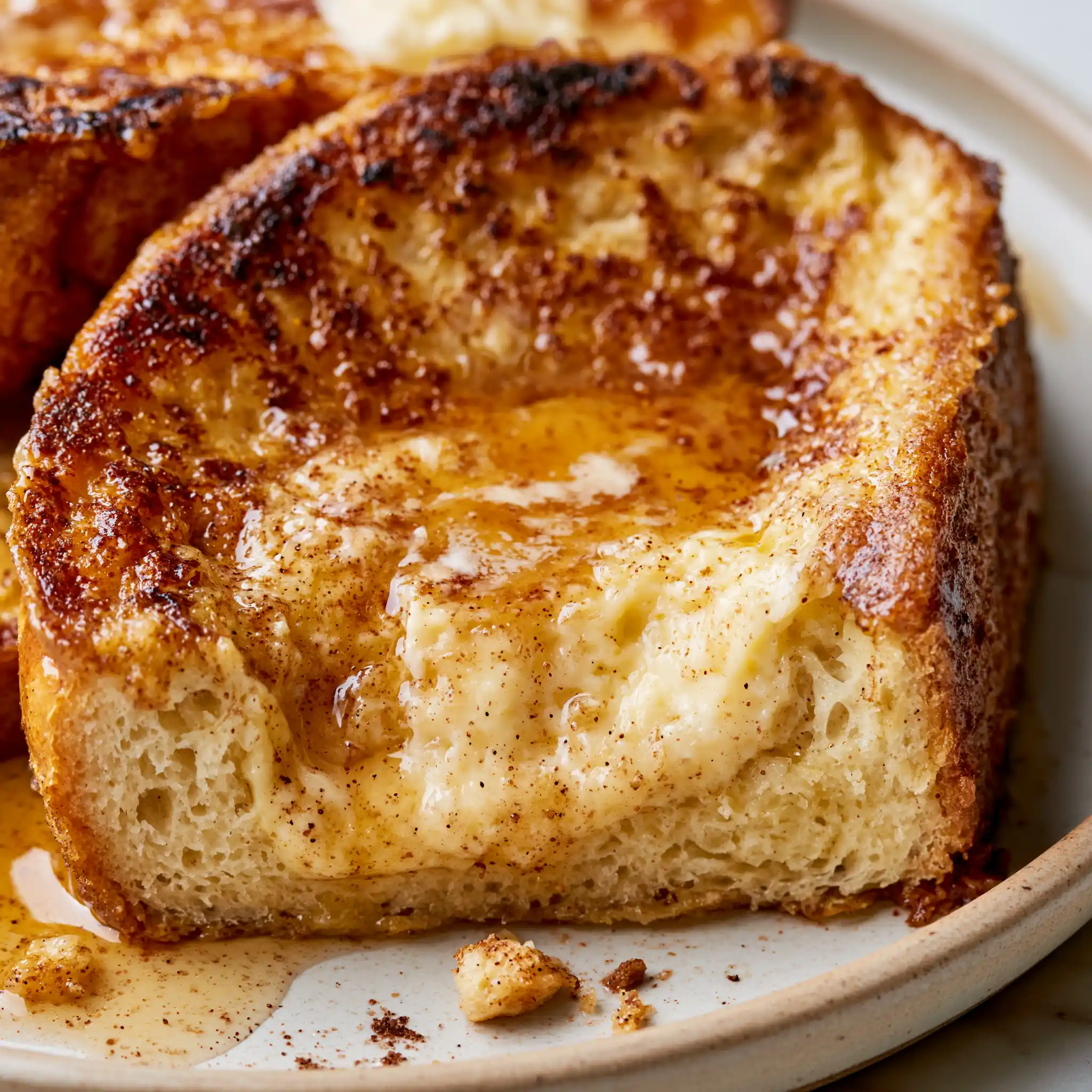
Use Medium Heat
This is the most important rule. High heat browns the sugar and butter before the custard in the center can cook.
Use Butter in Small Amounts
Add a little fresh butter between batches instead of flooding the pan. This keeps the flavor clean and prevents greasy slices.
Let the Skillet Preheat
Soaked bread placed in a cold skillet absorbs extra butter before browning begins.
Do Not Move It Too Soon
Leave the bread undisturbed long enough for a golden crust to develop before checking or flipping.
🛠 French Toast Troubleshooting
Why is it soggy?
The bread may have soaked too long, been too fresh or thin, or the skillet may have been too hot to cook the center before the outside browned.
Why is it dry?
Thin bread, very short soaking, excessively low heat or cooking for too long can dry the center.
Why does it taste too eggy?
Whisk the eggs completely, keep the egg-to-milk ratio balanced and use the vanilla, cinnamon, sugar and salt in the recipe.
Why is it burnt outside?
The pan is too hot. Reduce the heat and let the custard cook gradually before the butter and sugar become too dark.
🥄 Tips for Perfect Classic French Toast
For Extra-Fluffy French Toast
Use thick brioche or challah and allow enough soaking time for some custard to reach the center. Cook slowly over medium heat and avoid pressing down on the slices.
For Crispy Edges
Use slightly dry bread, let excess custard drip away and cook in a properly preheated skillet with a thin layer of butter. Once the center is cooked, you can raise the heat slightly for the final few seconds to deepen the crust.
⚠️ Common French Toast Mistakes
🍓 Best Classic French Toast Toppings
Classic
Warm maple syrup, butter and powdered sugar keep the vanilla-cinnamon flavor at the center of the plate.
Fresh Berry
Top with strawberries, blueberries, raspberries or blackberries and a little whipped cream.
Banana & Nut
Add sliced bananas, maple syrup and chopped pecans or walnuts for extra richness and texture.
Strawberries & Cream
Use sliced strawberries with lightly sweetened whipped cream for a brunch-style finish.
Peanut Butter & Banana
Spread a thin layer of peanut butter and add banana slices with a small drizzle of maple syrup.
Chocolate
Use chocolate chips, chocolate sauce or chocolate-hazelnut spread with berries or bananas.
✨ Classic French Toast Variations
Cinnamon
Add another ½ teaspoon cinnamon and finish warm slices with cinnamon sugar.
Vanilla
Increase the vanilla slightly for a stronger sweet aroma, especially good with berries.
Brioche
Use thick brioche for a richer, softer and more luxurious brunch-style result.
Banana
Top with sliced bananas, cinnamon, maple syrup and chopped nuts.
Berry
Use a mixture of fresh berries with powdered sugar and a small amount of syrup.
Orange-Vanilla
Add finely grated orange zest to the custard for a fresh citrus note.
🥗 What to Serve With French Toast
Sweet Sides
- Fresh berries
- Sliced bananas
- Fruit salad
- Yogurt
- Applesauce
- Whipped cream
Savory Breakfast Sides
- Scrambled eggs
- Breakfast potatoes
- Turkey sausage
- Fresh vegetables
- Avocado
For brunch, keep the French toast warm in the oven and place toppings in separate bowls so everyone can build their own plate.
🧊 Make Ahead, Storage, Freezing and Reheating
Make Ahead
Cook the French toast normally, cool the slices and refrigerate them in an airtight container with parchment between layers. You can also whisk the custard the night before and refrigerate it covered, then whisk again before using.
Refrigerator
Allow leftovers to cool, then store them in an airtight container. For the best texture, enjoy them within about 3 days.
Freezer
Cool completely, freeze slices individually on a tray until firm, then transfer them to a freezer-safe container or bag with parchment between layers.
Reheating
A skillet, toaster oven, conventional oven or air fryer restores more crispness. The microwave is fastest but creates a softer texture.
How to Keep French Toast Warm for a Crowd
Preheat the oven to about 200°F / 95°C. Place a wire rack over a baking sheet and arrange cooked slices in a single layer while you finish the remaining batches. The rack lets air circulate underneath so the bottoms stay drier than they would on a plate.
📊 Estimated Nutrition Information
These values come from the supplied recipe estimate and will vary with the bread, milk, butter and toppings used. They are intentionally not included in the structured Recipe schema as fixed nutrition claims.
| Calories | Approximately 350–420 kcal |
|---|---|
| Protein | Approximately 12–15 g |
| Carbohydrates | Approximately 45–52 g |
| Fat | Approximately 13–17 g |
| Sugar | Approximately 10–15 g |
| Fiber | Approximately 2–3 g |
Classic French Toast
Ingredients
- 8 thick slices bread
- 4 large eggs
- 1 cup whole milk
- 2 tbsp granulated sugar
- 2 tsp vanilla extract
- 1 tsp ground cinnamon
- ¼ tsp salt
- 2 tbsp unsalted butter, plus more as needed
Instructions
- Whisk eggs, milk, sugar, vanilla, cinnamon and salt until smooth.
- Preheat a nonstick skillet or griddle over medium heat and melt a little butter.
- Dip each bread slice according to its thickness, then let excess custard drip off.
- Cook for about 2–4 minutes on the first side until golden.
- Flip and cook another 2–3 minutes until the center is cooked through.
- Repeat with fresh butter as needed and serve warm with your favorite toppings.
❓ Classic French Toast FAQ
What is the best bread for French toast?
Brioche, challah, Texas toast and thick-cut French bread are all excellent choices. The best bread is sturdy enough to absorb the custard without falling apart.
Is stale bread better for French toast?
Slightly stale bread often works better because it contains less moisture and can absorb more custard without immediately becoming fragile.
Can I use regular sandwich bread?
Yes. Dip it very quickly because thin sandwich bread absorbs the egg mixture much faster than thick brioche or French bread.
Why is my French toast soggy?
Common causes include oversoaking, using very fresh or thin bread, too much liquid, overcrowding the skillet or cooking over heat that is too high.
Why is my French toast burnt outside but raw inside?
The skillet is probably too hot. Lower the heat so the custard inside the bread has time to cook before the exterior becomes too dark.
Can I make French toast without cinnamon?
Yes. Leave it out and use vanilla alone, or replace it with a small pinch of nutmeg.
Can I use non-dairy milk?
Yes. Unsweetened almond milk, oat milk and other milk alternatives can work, although the finished toast may be slightly less rich than with whole milk.
Can I use brown sugar instead of white sugar?
Yes. Brown sugar gives the custard a slightly deeper caramel flavor and can replace the granulated sugar in the same amount.
Do I need to add sugar to French toast?
No. You can leave it out, especially when serving the French toast with maple syrup or other sweet toppings.
How long should French toast cook?
Most thick slices need about 2 to 4 minutes on the first side and another 2 to 3 minutes on the second over medium heat. Very thick slices may need slightly longer.
Can I prepare the custard the night before?
Yes. Whisk the eggs, milk, sugar, vanilla, cinnamon and salt together, refrigerate the mixture covered and whisk it again before using.
Can I freeze cooked French toast?
Yes. Cool the slices completely, freeze them individually and transfer them to a freezer-safe container. They can be reheated directly from frozen.
💬 A Word From Amelia Bennett
🍰 You Might Also Like
Ready for a Golden Breakfast?
Save this Classic French Toast recipe for your next breakfast or weekend brunch, then tell us which bread and toppings you used.
View the Printable Recipe