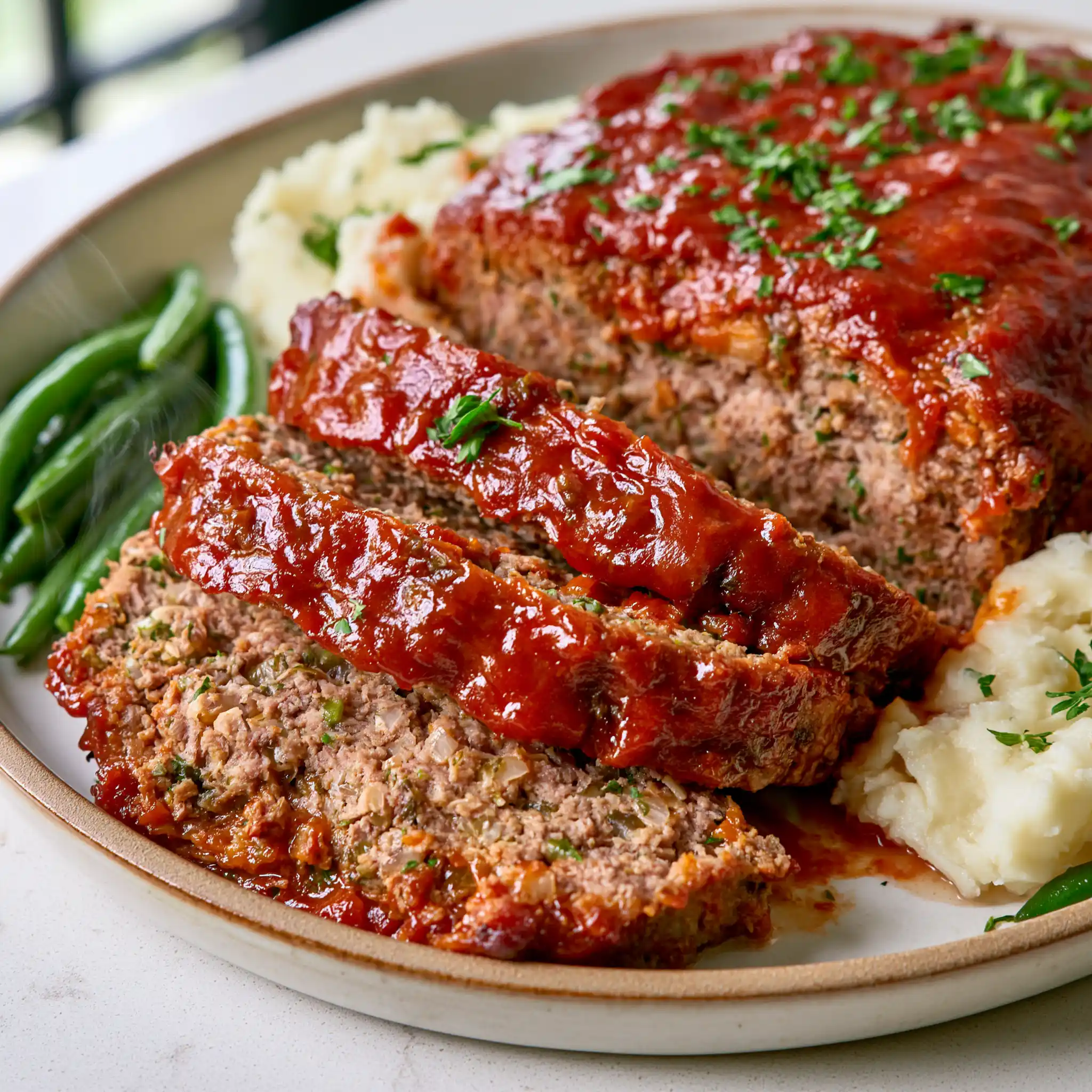
Juicy, tender ground beef with gentle seasoning and a sweet, tangy ketchup glaze that caramelizes in the oven.
Classic Meatloaf at a Glance
Soften the onion, soak the breadcrumbs in milk, combine the seasonings before adding the beef, and mix only until everything is distributed. Shape a broad, even loaf, apply the ketchup glaze in two stages, and bake at 375°F until the center reaches 160°F. Rest for at least 10 minutes before slicing.
A Juicy, Tender Family Dinner
Classic Meatloaf is one of those comforting family dinners that never goes out of style. Seasoned ground beef, breadcrumbs, onion, milk, and eggs create a tender loaf, while a glossy ketchup glaze becomes lightly caramelized in the oven.
The ingredients are simple, but their balance matters. The breadcrumbs hold moisture, the eggs provide structure, and the sautéed onion adds flavor without leaving crunchy pieces. When the mixture is handled gently, the finished loaf stays moist without falling apart and firm enough to cut into clean slices.
This recipe works for Sunday dinner, a relaxed weeknight meal, or advance meal preparation. Serve it warm with creamy mashed potatoes and vegetables, then use any leftovers for sandwiches the next day.
Why You’ll Love This Classic Meatloaf
Ingredients for Classic Meatloaf
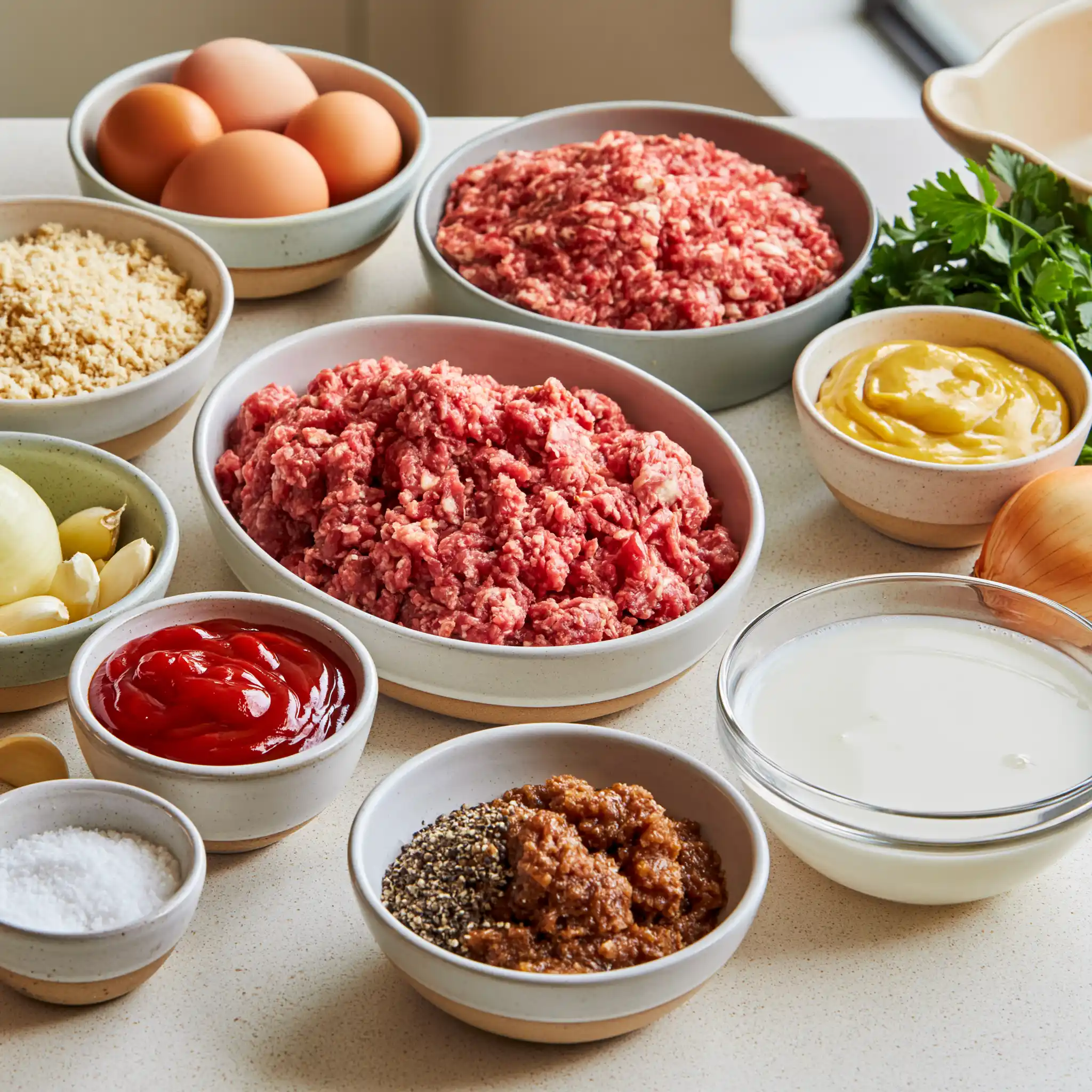
For the meatloaf
- 2 pounds ground beef
- 1 tablespoon olive oil
- 1 medium yellow onion, finely chopped
- 2 garlic cloves, minced
- 1 cup plain breadcrumbs
- ¾ cup whole milk
- 2 large eggs
- ¼ cup ketchup
- 1 tablespoon Worcestershire sauce
- 2 teaspoons Dijon mustard
- 1½ teaspoons salt
- 1 teaspoon dried Italian seasoning
- ½ teaspoon smoked or sweet paprika
- ½ teaspoon ground black pepper
- 2 tablespoons chopped fresh parsley
For the glaze
- ½ cup ketchup
- 2 tablespoons brown sugar
- 1 tablespoon Dijon mustard
- 1 teaspoon Worcestershire sauce
- ½ teaspoon garlic powder
Less sweet: Reduce the brown sugar to 1 tablespoon while keeping the other glaze ingredients unchanged.
Ingredient Notes and Easy Substitutions
Ground beef
Beef with approximately 15 to 20 percent fat gives a juicy result without making the loaf excessively greasy. Extra-lean beef produces a firmer texture.
Breadcrumbs
Plain breadcrumbs absorb milk and meat juices, helping the loaf stay soft and hold together. Crushed crackers, quick oats, or soft bread are practical alternatives.
Milk
Milk hydrates the breadcrumbs before they touch the beef. Whole milk is richest, but reduced-fat milk, unsweetened plant milk, or beef broth can be used.
Eggs
Two large eggs bind a two-pound loaf. Adding more can make the meatloaf firm or slightly rubbery.
Onion and garlic
Finely chopped, sautéed onion adds moisture and natural sweetness. Garlic strengthens the savory flavor without overpowering the beef.
Worcestershire
Worcestershire sauce adds depth and tang. Soy sauce works in a smaller amount, but reduce the remaining salt because it tastes saltier.
Dijon mustard
Dijon balances the beef and sweet glaze with gentle acidity. Yellow mustard gives a milder, more familiar flavor.
Ketchup
Ketchup adds moisture inside the loaf and forms the thick glaze. Tomato sauce can replace it inside the mixture but is less suitable for the topping.
Ground-meat blends
Replace part of the beef with ground pork for richness, or use turkey or chicken and cook those poultry versions to 165°F.
Why Breadcrumbs and Milk Matter
Combining breadcrumbs with milk creates a soft mixture often called a panade. The breadcrumbs absorb the liquid, soften, and distribute moisture through the ground beef instead of pulling juices away while the loaf bakes.
Stir the breadcrumbs and milk together and let them stand for about five minutes. They should look evenly moist and soft, not dry or excessively watery. This short rest is one of the most reliable ways to prevent dry meatloaf.
Choosing the Right Pan
Rimmed baking sheet
A free-form loaf develops more browned edges, gives the glaze more surface area, and lets rendered fat move away from the meat.
Loaf pan
A standard loaf pan creates straight sides and a compact shape. Carefully drain accumulated fat after baking and let the loaf rest before lifting.
Shape gently
Whichever method you choose, form an even loaf without forcing the mixture tightly into the pan. Heavy compression creates a dense texture.
Classic Meatloaf Recipe Overview
| Recipe detail | Information |
|---|---|
| Preparation time | 20 minutes |
| Cooking time | 55–65 minutes |
| Resting time | 10 minutes |
| Total time | About 1 hour 30 minutes |
| Servings | 6–8 |
| Difficulty | Easy |
| Cuisine | American |
| Cooking method | Oven-baked |
| Safe center temperature | 160°F for ground beef |
How to Make Classic Meatloaf
A moist loaf depends on four habits: soften the onion, hydrate the breadcrumbs, mix the beef gently, and rest the baked loaf before slicing.
Prepare the oven and pan
Preheat the oven to 375°F. Line a rimmed baking sheet with parchment or foil and grease it lightly. A loaf pan can also be used.
Sauté the onion and garlic
Heat the olive oil over medium heat. Cook the finely chopped onion for 4 to 5 minutes until soft and translucent. Add the garlic for the final 30 seconds, then cool slightly.
Hydrate the breadcrumbs
Stir the breadcrumbs and milk in a small bowl. Let the mixture rest for about 5 minutes so every crumb softens and absorbs moisture.
Combine seasonings first
In a large bowl, mix the panade, cooled onion and garlic, eggs, ketchup, Worcestershire sauce, Dijon, salt, Italian seasoning, paprika, pepper, and parsley.
Add the ground beef
Add the beef and use clean hands or a large fork to lift and fold the mixture together. Stop as soon as the ingredients look evenly distributed; do not knead or squeeze.
Check the seasoning if desired
Cook a small spoonful of the mixture completely in a skillet and taste it. Adjust the salt, pepper, herbs, or Worcestershire sauce. Never taste the raw mixture.
Shape an even loaf
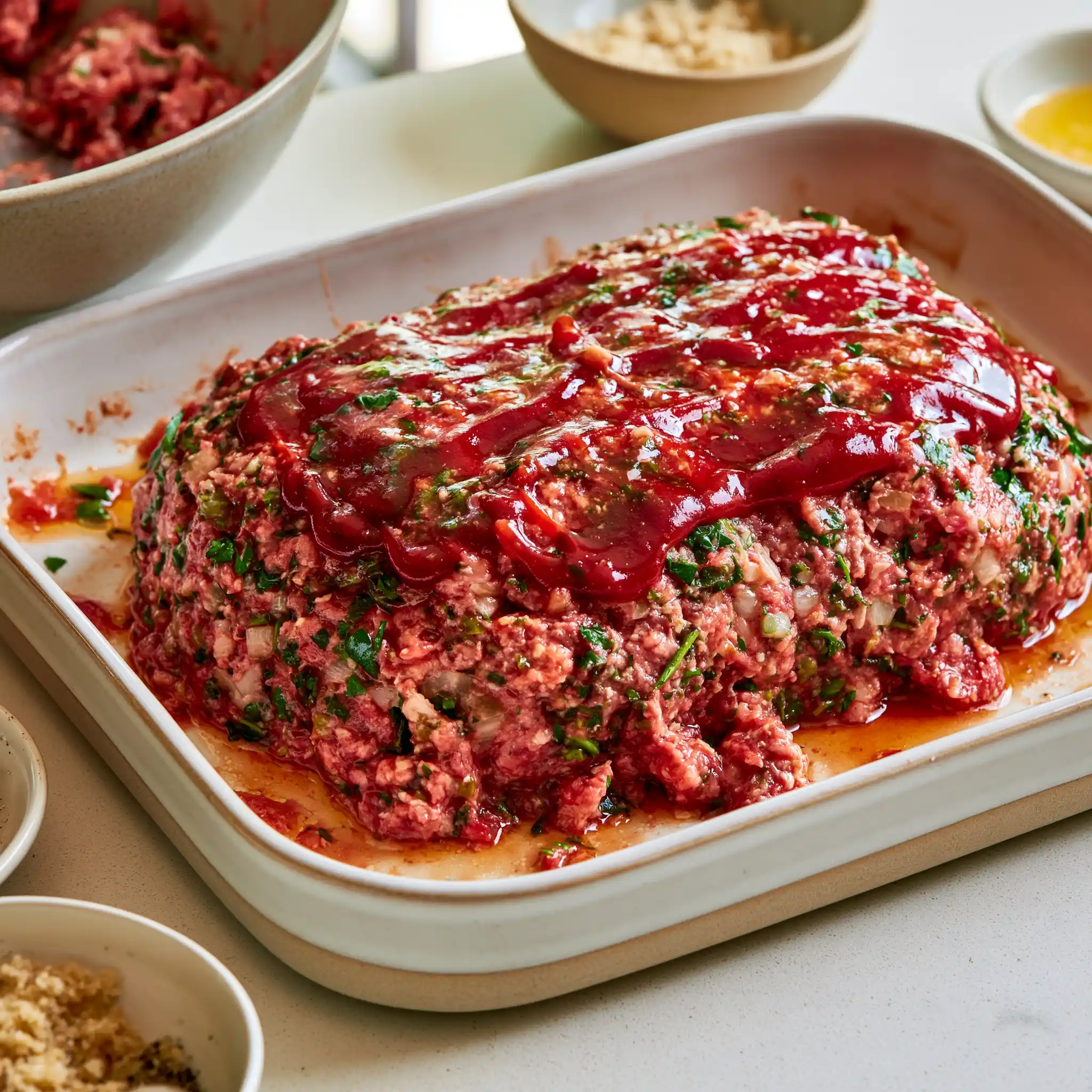
Form a loaf about 9 inches long and 4 to 5 inches wide. Keep the width consistent so the ends do not dry out before the center is ready.
Mix and apply the glaze
Stir the ketchup, brown sugar, Dijon, Worcestershire sauce, and garlic powder until smooth. Spread half over the top and sides; reserve the rest.
Bake in two stages
Bake for about 40 minutes. Add the remaining glaze, then continue for 15 to 25 minutes, until the thickest center reaches 160°F.
Rest before slicing
Remove the meatloaf from the oven and rest it for at least 10 minutes. Slice with a sharp knife into pieces approximately ¾ inch thick.
Why the Glaze Goes On in Two Stages
The first layer cooks into the surface of the meatloaf and begins building a savory-sweet crust. The second layer stays glossier and creates the familiar sticky finish without exposing all the sugar to the full baking time.
Use the back of a spoon or a pastry brush to spread both layers thinly and evenly. If the top browns faster than expected, cover it loosely with foil near the end.
How to Tell When Meatloaf Is Done
Use a thermometer
Insert an instant-read thermometer into the thickest central area without touching the pan. Ground beef meatloaf is ready at 160°F.
Do not trust color alone
A browned exterior does not prove that the middle is fully cooked, and a pink tint alone does not reliably show doneness.
Check near the end
Begin checking after the second glaze is added. Repeatedly opening the oven lowers the heat and can lengthen the baking time.
How to Keep Meatloaf Moist and Sliceable
Use some fat
Beef with 15 to 20 percent fat generally gives the best balance of tenderness and flavor.
Hydrate the crumbs
Soaking breadcrumbs before mixing protects the beef juices and keeps the texture soft.
Cook the onion
Softened onion blends into the loaf, supplies moisture, and avoids crunchy gaps in the slices.
Measure carefully
Too many breadcrumbs absorb excess moisture, while too many eggs make the loaf firm.
Mix gently
Lift and fold the ingredients with your fingertips instead of squeezing them with your palms.
Rest the loaf
Ten minutes lets the juices redistribute and the structure become firm enough for neat slicing.
Common Meatloaf Problems and Solutions
Dry meatloaf
Extra-lean beef, dry breadcrumbs, too many crumbs, or overbaking can remove moisture. Use the panade and stop at the safe center temperature.Mushy center
Too much liquid or uncooked moisture-rich vegetables can soften the structure. Measure carefully and sauté vegetables first.Crumbly slices
Insufficient egg or breadcrumbs, large onion pieces, or slicing while very hot can make the loaf fall apart.Dense texture
Overmixing and pressing the mixture too tightly compress the ground beef. Handle it only as much as necessary.Excess grease
Very fatty beef releases more grease. Choose moderate-fat beef and use a rimmed sheet so rendered fat can move away.Burned glaze
Too much sugar or one thick early layer can scorch. Apply two thinner layers and add the second near the end.Uneven cooking
A thick center and thin ends finish at different times. Shape an even loaf of consistent width and thickness.Bland flavor
Cook a small sample in a skillet before shaping, then adjust salt, herbs, mustard, or Worcestershire safely.Classic Meatloaf Variations
Beef and pork
Replace one pound of beef with one pound of ground pork for a richer, especially tender loaf.
Turkey
Use ground turkey containing some dark meat, add a little extra oil or ketchup, and cook the center to 165°F.
Chicken
Keep all the sautéed onion, milk, eggs, and breadcrumbs. Parmesan, garlic, and Italian seasoning complement the mild meat.
Bacon-wrapped
Overlap thin bacon strips across the loaf and add a little glaze near the end. Use a rimmed baking sheet for the extra rendered fat.
Cheese-stuffed
Seal cheddar, mozzarella, Monterey Jack, or provolone inside the center, leaving a solid meat border around the cheese.
Barbecue
Replace ketchup with barbecue sauce in the loaf and glaze, then add smoked paprika or green onion.
Mushroom
Cook finely chopped mushrooms until their moisture evaporates, cool them, and fold them into the mixture.
Spicy
Add a small amount of jalapeño, red pepper flakes, or hot sauce, or use Pepper Jack in a stuffed loaf.
Mini meatloaves
Divide the mixture into smaller loaves or muffin cups. Begin checking early because small portions cook faster.
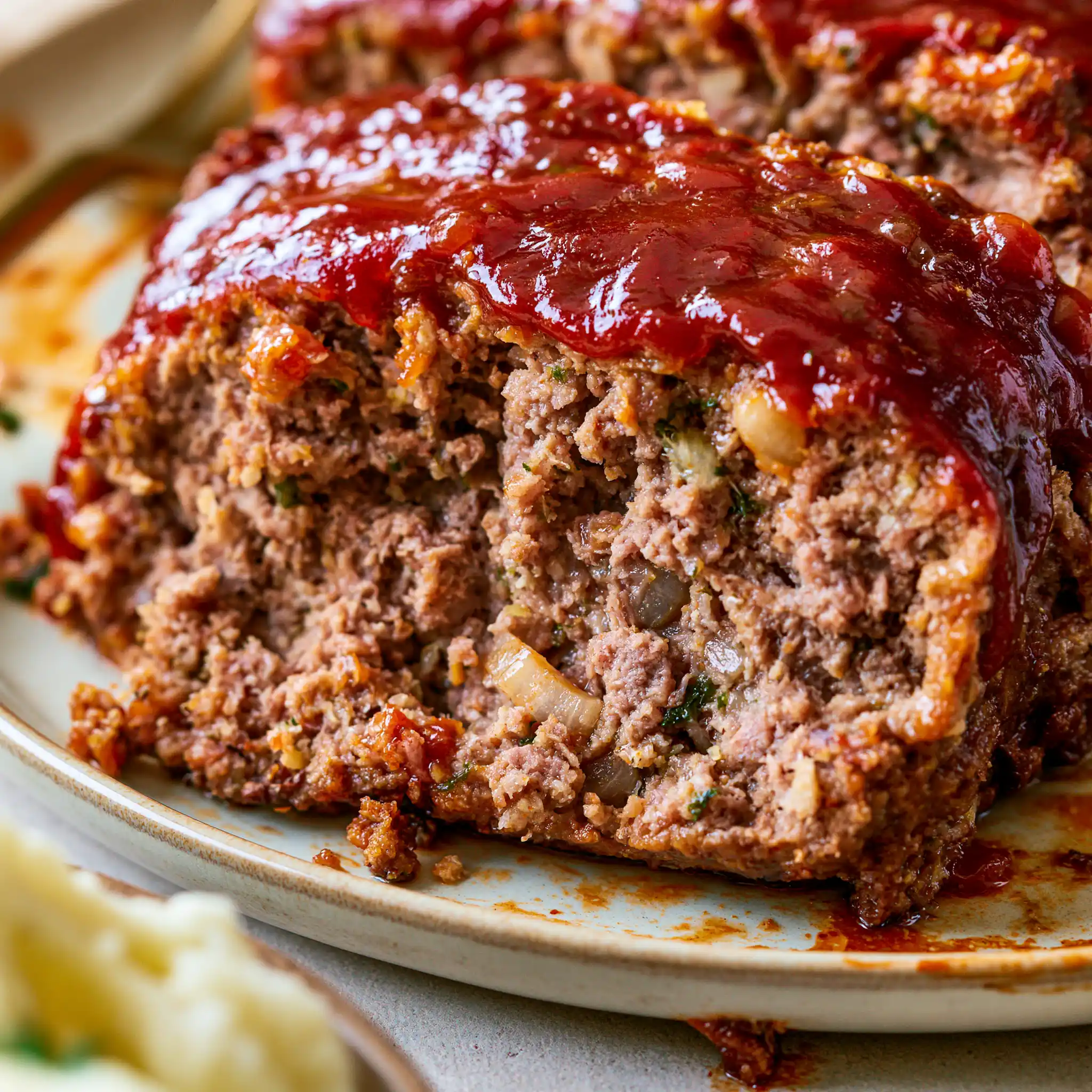
What to Serve with Classic Meatloaf
Comforting sides
- Creamy or garlic mashed potatoes
- Roasted baby potatoes or potato wedges
- Scalloped potatoes
- Buttered rice or egg noodles
- Macaroni and cheese
- Soft dinner rolls or cornbread
Mashed potatoes are the traditional choice because they catch the extra glaze and juices.
Fresh and vegetable sides
- Roasted green beans or Brussels sprouts
- Steamed broccoli or buttered peas
- Glazed carrots or roasted zucchini
- Simple green salad
- Tomato and cucumber salad
- Vinegar-based cabbage or apple slaw
A crisp, tangy side balances the richness of the beef and sweet glaze.
Make Ahead, Store, Freeze, and Reheat
Prepare ahead
Shape the uncooked loaf, cover tightly, and refrigerate for up to 24 hours. Keep the glaze separate and apply it just before baking.
Refrigerate leftovers
Cool promptly, place the loaf or slices in an airtight container, and refrigerate for 3 to 4 days.
Freeze uncooked
Shape without glaze, wrap securely, and freeze for up to approximately 3 months. Thaw overnight in the refrigerator before baking.
Freeze cooked
Cool completely and freeze the whole loaf or separated slices for up to approximately 3 months.
Reheat in the oven
Cover slices with foil in a baking dish, add a spoonful of broth or glaze, and warm at 325°F until hot.
Reheat individual slices
Warm gently in a covered skillet or use short microwave intervals with a little water, broth, gravy, or glaze.
Easy Ways to Use Leftover Meatloaf
Layer a thick slice on toasted bread with mustard, lettuce, tomato, and pickles; add cheddar and toast it as a meatloaf melt; crumble it into tomato sauce for pasta; or chop it into a skillet hash with potatoes, onion, and bell pepper.
Reheat only the amount you plan to serve. Keeping the remaining slices cold and covered protects their texture and shortens the time they spend outside the refrigerator.
 Printable recipe card
Recipe Card: Classic Meatloaf
A tender ground beef loaf with sautéed onion, a milk-soaked breadcrumb binder, and a glossy ketchup glaze.
Ingredients
- 2 pounds ground beef
- 1 tablespoon olive oil
- 1 medium yellow onion, finely chopped
- 2 garlic cloves, minced
- 1 cup plain breadcrumbs
- ¾ cup whole milk
- 2 large eggs
- ¼ cup ketchup
- 1 tablespoon Worcestershire sauce
- 2 teaspoons Dijon mustard
- 1½ teaspoons salt
- 1 teaspoon Italian seasoning
- ½ teaspoon paprika
- ½ teaspoon black pepper
- 2 tablespoons chopped parsley
- Glaze: ½ cup ketchup, 2 tablespoons brown sugar, 1 tablespoon Dijon, 1 teaspoon Worcestershire sauce, ½ teaspoon garlic powder
Instructions
- Preheat the oven to 375°F and prepare a rimmed sheet or loaf pan.
- Sauté the onion in olive oil for 4 to 5 minutes; add the garlic for 30 seconds and cool.
- Combine the breadcrumbs and milk; rest for 5 minutes.
- Mix the panade, onion, garlic, eggs, ketchup, Worcestershire sauce, Dijon, and seasonings.
- Add the beef and combine gently without kneading.
- Shape an even 9-inch loaf on the prepared sheet.
- Mix the glaze and spread half over the loaf.
- Bake for 40 minutes, then apply the remaining glaze.
- Bake another 15 to 25 minutes, until the center reaches 160°F.
- Rest for at least 10 minutes before slicing.
Classic Meatloaf FAQ
What is the secret to moist meatloaf?
Use ground beef with some fat, soak the breadcrumbs in milk, include sautéed onion, mix gently, and stop baking when the center reaches the safe temperature.
Should I cover meatloaf while it bakes?
No. Leaving this meatloaf uncovered helps the exterior brown and the glaze caramelize. Cover it loosely with foil only if the top browns too quickly near the end.
Is it better to cook meatloaf at 350°F or 375°F?
Both temperatures can work, but this recipe uses 375°F for good browning and even cooking. A loaf baked at 350°F may need more time; the center temperature is the final guide.
Can I use oats instead of breadcrumbs?
Yes. Quick oats can replace plain breadcrumbs. Soak them in the milk first; the finished texture may be slightly heartier.
Can I use crackers instead of breadcrumbs?
Yes. Finely crushed crackers work as a binder. Reduce the added salt when the crackers are already salty.
Can I make meatloaf without milk?
Yes. Replace the milk with beef broth, unsweetened plant-based milk, or water. Broth adds moisture and savory flavor.
Can I make meatloaf without eggs?
An egg substitute or prepared flax mixture can be used, but the loaf may be softer and more fragile because eggs provide important structure.
Do I need to sauté the onion first?
It is strongly recommended. Sautéed onion has a softer texture and milder flavor and blends more evenly into the meatloaf than raw onion.
Can I prepare mini meatloaves?
Yes. Divide the mixture into small loaves on a rimmed sheet or use a muffin pan. Begin checking early because small portions cook faster.
Why should meatloaf rest after baking?
Resting lets the juices redistribute and gives the loaf time to firm. Without it, juices can run out and the slices may crumble.
How long should meatloaf rest?
Rest it for at least 10 minutes. A large loaf can rest for up to 15 minutes while the side dishes are finished.
Can I make this meatloaf gluten-free?
Yes. Use certified gluten-free breadcrumbs or crackers and verify that the Worcestershire sauce, mustard, ketchup, and other packaged ingredients meet your needs.
What can I use instead of ketchup for the glaze?
Barbecue sauce, chili sauce, thick tomato sauce, or a balanced mixture of tomato paste and honey can work. Adjust the sweetness and thickness as needed.
Can I add vegetables to meatloaf?
Yes. Finely chop carrots, celery, bell pepper, zucchini, or mushrooms, cook them first, and remove excess moisture before adding them to the beef.
Why does my meatloaf taste bland?
The mixture may need more salt, Worcestershire sauce, herbs, garlic, or mustard. Cook a small sample in a skillet before shaping so you can adjust it safely.
What internal temperature should meatloaf reach?
Ground beef meatloaf should reach 160°F in the thickest center. Meatloaf made with ground turkey or chicken should reach 165°F.
Food-safety reference: The USDA ground beef guidance recommends cooking ground beef to 160°F with a food thermometer and using refrigerated cooked leftovers within about 3 to 4 days.
Make Your Classic Meatloaf
Prepare the loaf with the classic ketchup glaze, serve it with your favorite potatoes and vegetables, and share which side dish made the meal complete. Save the printable card for an easy family dinner whenever comfort food is on the menu.
Go to the printable recipe card