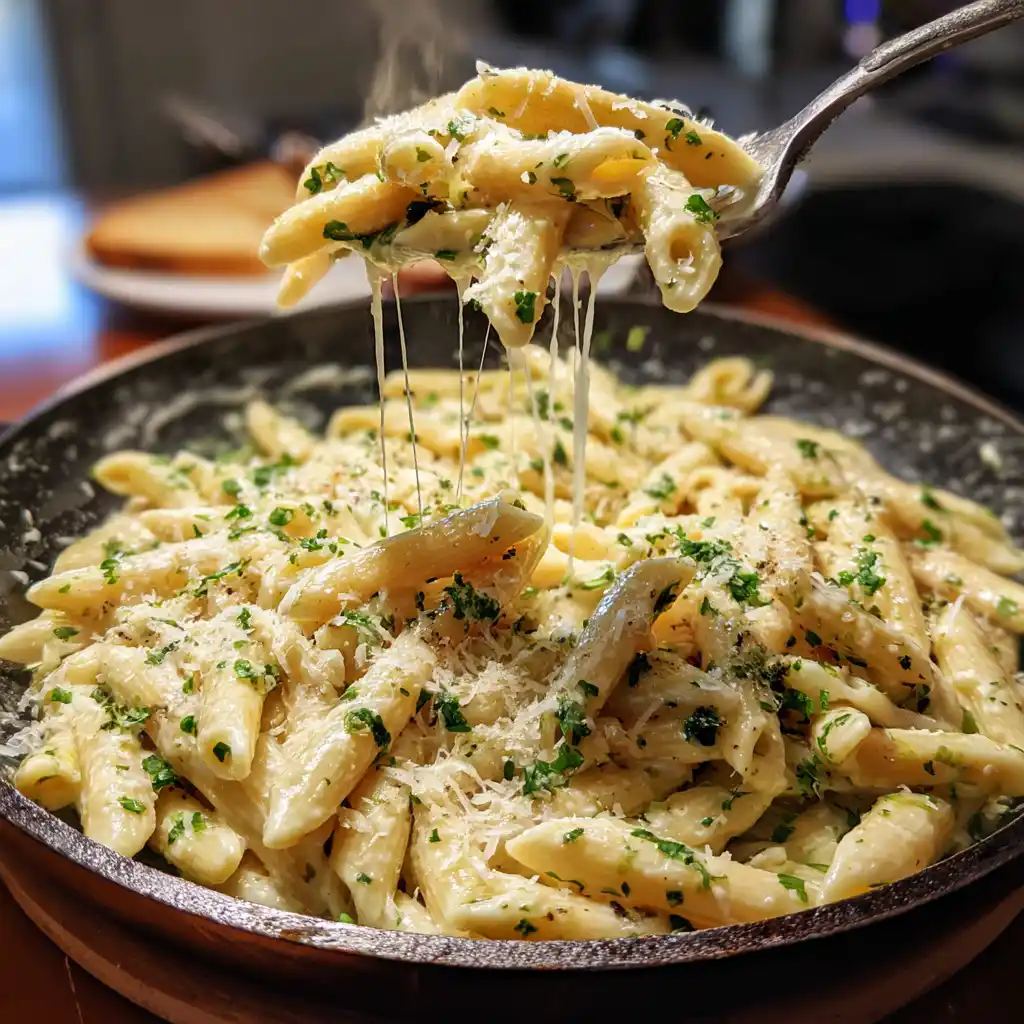
Tender pasta cooks directly in a savory garlic-infused broth, then finishes with cream and freshly grated Parmesan for a silky weeknight sauce.
One-Pot Creamy Garlic Parmesan Pasta: Quick Answer
Sauté fresh garlic in butter, simmer the dry pasta directly in broth and milk, then lower the heat and gradually stir in cream and finely grated Parmesan. Regular stirring releases the pasta’s starch and creates a smooth sauce without a separate roux or another pot.
“The beauty of a good one-pot pasta is that the pasta helps create its own sauce. The starch released during cooking gives you that silky texture without making the recipe complicated.”— Solivia
One-Pot Creamy Garlic Parmesan Pasta is one of those simple dinners that proves you do not need a long ingredient list or several pans to make something deeply satisfying. The noodles cook directly in savory liquid with fresh garlic and seasonings, so every strand absorbs flavor from the beginning.
Once the pasta is tender, cream and freshly grated Parmesan turn the remaining starchy liquid into a glossy sauce that coats every bite. Everything happens in one wide pot, which means less preparation, fewer dishes, and more time to enjoy dinner.
This is the kind of recipe to keep for busy evenings when you still want a homemade meal that feels special. Serve it as written, or use it as a flexible base for chicken, shrimp, spinach, broccoli, mushrooms, peas, or sun-dried tomatoes.
Why You’ll Love This One-Pot Creamy Garlic Parmesan Pasta
One pot. The pasta cooks directly in the sauce ingredients.
About 30 minutes. Most of the time is hands-off simmering.
Simple ingredients. Garlic, butter, broth, milk, cream, and Parmesan do the work.
Naturally creamy. Pasta starch thickens the sauce without a roux.
Easy to customize. Add protein, vegetables, lemon, herbs, or heat.
Minimal cleanup. No separate pasta pot or sauce pan is needed.
Why the One-Pot Method Works
Traditional pasta is cooked in a large volume of water and drained. Here, the noodles simmer in a smaller amount of flavorful liquid, so the released starch stays in the pan.
That starch combines with milk, cream, and Parmesan to thicken the sauce naturally. Stirring regularly prevents sticking and distributes the starch evenly.
Ingredients for One-Pot Creamy Garlic Parmesan Pasta
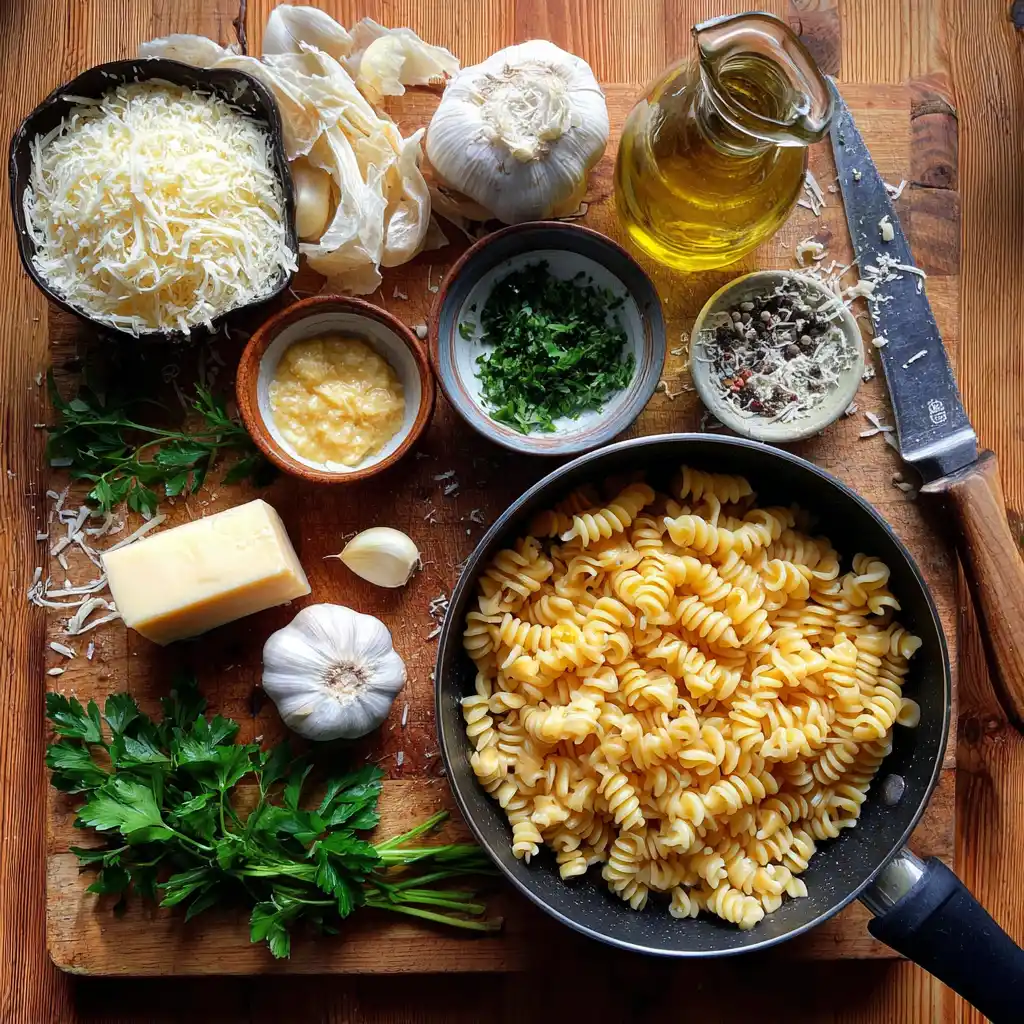
The ingredient list is short, but each item has a specific job. Fresh garlic builds the savory base, broth seasons the pasta from within, dairy adds richness, and Parmesan provides both salt and depth.
Main Ingredients
- 12 ounces fettuccine, linguine, spaghetti, or another long pasta
- 2 tablespoons unsalted butter
- 4 large garlic cloves, finely minced
- 3 cups low-sodium chicken broth or vegetable broth
- 1 cup whole milk
- ½ cup heavy cream
Cheese & Seasoning
- 1 cup freshly grated Parmesan cheese
- ½ teaspoon Italian seasoning
- ¼ teaspoon ground black pepper
- Salt, to taste
- 2 tablespoons chopped fresh parsley
- Extra Parmesan, for serving
Ingredient Notes and Easy Substitutions
Pasta
Fettuccine, linguine, and spaghetti hold the sauce beautifully. Penne, rigatoni, fusilli, and farfalle also work, but may need a different cooking time or a little extra liquid.
Fresh Garlic
Four cloves create a noticeable but balanced garlic flavor. Cook them gently in butter only until fragrant; browned garlic can taste bitter.
Parmesan
Grate a block of Parmesan shortly before cooking. Finely grated cheese melts faster and more evenly than large shreds or packaged cheese.
Heavy Cream
Heavy cream produces the richest texture. For a lighter sauce, replace it with whole milk, half-and-half, or evaporated milk.
Broth
Chicken broth gives deeper savory flavor. Vegetable broth is an easy meat-free option. Low-sodium broth gives you better control over seasoning.
Butter
Butter carries the garlic flavor and rounds out the sauce. Olive oil can be substituted, although the final flavor will be different.
How to Build a Silky Parmesan Sauce
The sauce depends on starch, temperature, and gradual mixing. Control those three details and the recipe becomes reliable.
Keep the starch
Do not drain the pasta. Its cooking liquid is the foundation of the sauce.
Lower the heat
Aggressive boiling can make dairy separate and Parmesan turn grainy.
Add cheese slowly
Small handfuls melt more evenly and emulsify with the liquid.
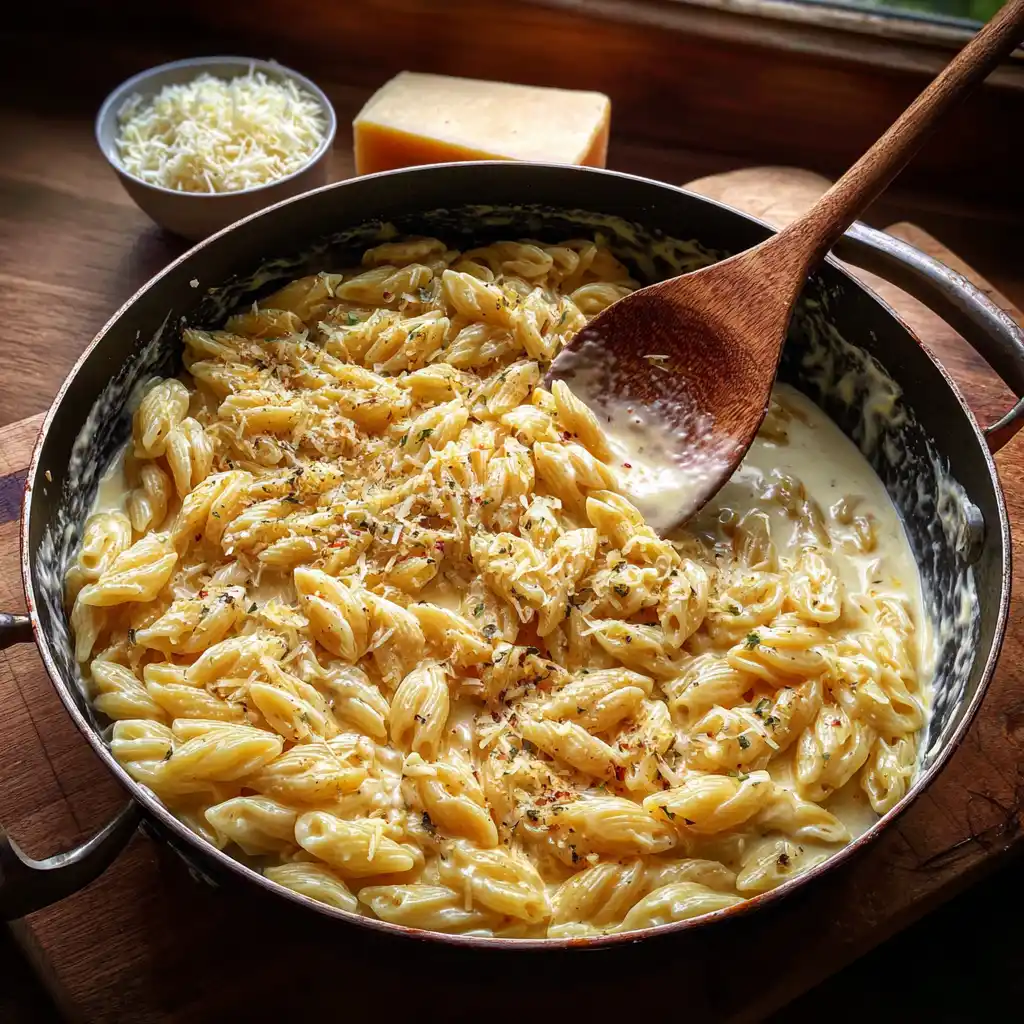
How to Make One-Pot Creamy Garlic Parmesan Pasta
This recipe stays simple from beginning to end. The most important details are using moderate heat, stirring the pasta regularly, and adding the Parmesan only after the heat has been lowered.
Melt the Butter
Place a large, deep skillet or wide pot over medium heat. Melt 2 tablespoons unsalted butter completely without letting it brown.
Sauté the Garlic
Add the minced garlic and cook for 30 to 60 seconds, stirring constantly, until fragrant but still pale.
Add the Cooking Liquid
Pour in the broth and whole milk. Add Italian seasoning and black pepper, stir, and bring the mixture to a gentle simmer rather than a hard boil.
Add the Pasta
Place the dry pasta directly in the pot. Let long strands soften for about 30 seconds, then gently press the rest into the liquid with tongs.
Simmer Until Tender
Reduce the heat to medium-low and simmer for 10 to 14 minutes, stirring every minute or two. Add small splashes of broth or milk only if the pan becomes dry before the pasta is tender.
Add the Heavy Cream
Reduce the heat to low, pour in the heavy cream, and stir gently for about 1 minute without boiling aggressively.
Add the Parmesan
Keep the pot over very low heat or remove it from direct heat. Add finely grated Parmesan in small handfuls, stirring until each addition melts before adding more.
Adjust the Sauce
If the sauce is too thick, add a small splash of warm broth or milk. If it looks loose, let the pasta rest for 1 to 2 minutes. Taste before adding salt.
Finish and Serve
Fold in chopped parsley and serve immediately with extra Parmesan, black pepper, and parsley.
How Do You Know When the Pasta Is Ready?
Taste a noodle toward the end of cooking. It should be tender but still have a slight bite in the center. You should also see a small amount of creamy, starchy liquid remaining at the bottom of the pan.
Do not cook until every drop disappears. That remaining liquid combines with the cream and Parmesan to form the final sauce. If the sauce looks a little loose at first, let the finished pasta rest for a minute or two; it will thicken quickly.
Tips for the Creamiest Garlic Parmesan Pasta
These small choices make the difference between a silky sauce and a thick, grainy one.
Long pasta softens more easily and stirring is more effective.
Fine cheese melts faster and is less likely to clump.
Add only small splashes if the pan dries before the pasta is tender.
Stirring prevents sticking and distributes the starch.
Broth and Parmesan already contribute salt.
The noodles continue absorbing sauce as they rest.
How to Fix the Sauce
If the Sauce Is Too Thick
Stir in 1 to 2 tablespoons of warm broth, milk, or cream. Add more only if needed. Creamy pasta thickens fast because the noodles continue absorbing moisture.
If the Sauce Is Too Thin
Remove the pot from the heat and wait 1 to 2 minutes. If it still looks loose, stir in a small amount of finely grated Parmesan. Flour or cornstarch should not be necessary.
Why Did My Parmesan Sauce Turn Grainy?
A grainy sauce usually means the heat was too high, the cheese was added too quickly, or pre-shredded Parmesan was used. Lower the heat before adding cheese, stir it in gradually, and use freshly grated Parmesan whenever possible.
Add Protein or Vegetables
This creamy garlic Parmesan pasta works as a flexible dinner base. Cook proteins separately and add them near the end so they stay tender.
Chicken
Fold in about 2 cups cooked chicken, or serve with Air Fryer Chicken Bites.
Shrimp
Sauté separately in butter, then return it to the finished pasta just before serving.
Spinach
Stir in 2 to 3 cups of baby spinach near the end and let it wilt.
Mushrooms
Sauté 8 ounces sliced mushrooms before the garlic, then return them near the end.
Broccoli
Add small florets during the final 4 to 5 minutes, or steam separately.
More Ideas
Try peas, asparagus, zucchini, or sun-dried tomatoes without overloading the pot.
Easy One-Pot Creamy Garlic Parmesan Pasta Variations
Once you know the basic method, small additions can give the same recipe a completely different personality.
Lemon Garlic
Add 1 teaspoon lemon zest and 1 to 2 tablespoons lemon juice after removing the pot from the heat.
Spicy
Cook ¼ teaspoon crushed red pepper flakes briefly with the garlic.
Chicken
Fold in about 2 cups cooked sliced or diced chicken after the Parmesan melts.
Bacon
Add 5 to 6 cooked, crumbled bacon slices. Taste before adding salt.
Sun-Dried Tomato
Stir in about ⅓ cup chopped sun-dried tomatoes during the final minutes.
Primavera
Combine broccoli, zucchini, bell peppers, peas, and spinach, adding each according to cooking time.
Shrimp
Sauté seasoned shrimp separately and fold it into the finished pasta.
Mushroom & Spinach
Brown mushrooms first, then wilt spinach into the pasta just before the cream goes in.
What to Serve with Creamy Garlic Parmesan Pasta
Because the pasta is rich and satisfying, simple, crisp sides give the meal the best contrast.
Fresh Sides
- Tomato Cucumber Avocado Salad
- Green salad with vinaigrette
- Cucumber and cherry tomatoes
- Simple lemony greens
Vegetables
- Roasted broccoli
- Asparagus
- Zucchini
- Green beans
Bread & Protein
- Garlic bread
- Crusty sourdough
- Grilled chicken
- Air-fried chicken bites
Common One-Pot Pasta Mistakes to Avoid
Using a small pan
A cramped pot makes stirring difficult and encourages uneven cooking.
Walking away
One-pot pasta needs regular stirring because it cooks in limited liquid.
Adding excess liquid
Start with the measured amount and add only small splashes when necessary.
Using high heat
A hard boil can scorch milk and evaporate liquid before the noodles soften.
Overcooking the pasta
Stop when the noodles still have a slight bite; they continue cooking as the sauce finishes.
Boiling the Parmesan
High heat can make the cheese separate and the sauce become grainy.
Using packaged cheese
Anti-caking ingredients can prevent a smooth melt.
Serving too late
The pasta absorbs sauce as it sits, so have plates and garnishes ready.
Can You Make Creamy Garlic Parmesan Pasta Ahead?
You can, but the pasta is best served immediately. As it sits, the noodles continue absorbing moisture and the sauce becomes thicker. If you know you will reheat it, leave the sauce slightly looser during the initial cooking and reserve a little broth or milk for later.
Storage, Freezing, and Reheating
Allow the pasta to cool briefly, then transfer it to an airtight container and refrigerate promptly. For the best texture, keep the container tightly sealed and use the leftovers within 3 to 4 days.
| Refrigerator | 3 to 4 days |
|---|---|
| Freezer | Possible, but not ideal for texture |
| Stovetop reheating | Medium-low heat with a splash of milk or broth |
| Microwave reheating | Short intervals, stirring between each one |
Can You Freeze It?
Freezing is possible, but cream-based sauces may separate and the pasta can become softer after thawing. If you freeze it, use individual portions, thaw overnight in the refrigerator, and add a little milk or cream while reheating.
How to Reheat It
On the stovetop, add a small splash of milk, cream, or broth and warm gently over medium-low heat while stirring. In the microwave, add about 1 tablespoon liquid per serving, cover loosely, and heat in short intervals. Restore moisture first; add extra Parmesan only after the sauce has loosened.
Estimated Nutrition Information
Values vary with pasta, broth, dairy, and Parmesan brands and do not include optional chicken, shrimp, bacon, or extra cheese.
| Calories per serving | 560–620 kcal |
|---|---|
| Protein | 20–24 g |
| Carbohydrates | 65–72 g |
| Fat | 24–29 g |
| Saturated fat | 13–16 g |
| Fiber | 3–4 g |
| Sodium | 650–900 mg |
One-Pot Creamy Garlic Parmesan Pasta Recipe Card
Use the buttons to scale ingredient quantities, then print the card if needed.
Ingredients
- 12 oz fettuccine, linguine, spaghetti, or another pasta
- 2 tbsp unsalted butter
- 4 large garlic cloves, finely minced
- 3 cups low-sodium chicken or vegetable broth
- 1 cup whole milk
- 0.5 cup heavy cream
- 1 cup freshly grated Parmesan
- 0.5 tsp Italian seasoning
- 0.25 tsp ground black pepper
- Salt, chopped parsley, and extra Parmesan, to taste
Salt, garnish, pan size, and final liquid adjustments should be handled by taste and texture rather than multiplied mechanically.
Instructions
- Melt the Butter: Place a large, deep skillet or wide pot over medium heat. Melt 2 tablespoons unsalted butter completely without letting it brown.
- Sauté the Garlic: Add the minced garlic and cook for 30 to 60 seconds, stirring constantly, until fragrant but still pale.
- Add the Cooking Liquid: Pour in the broth and whole milk. Add Italian seasoning and black pepper, stir, and bring the mixture to a gentle simmer rather than a hard boil.
- Add the Pasta: Place the dry pasta directly in the pot. Let long strands soften for about 30 seconds, then gently press the rest into the liquid with tongs.
- Simmer Until Tender: Reduce the heat to medium-low and simmer for 10 to 14 minutes, stirring every minute or two. Add small splashes of broth or milk only if the pan becomes dry before the pasta is tender.
- Add the Heavy Cream: Reduce the heat to low, pour in the heavy cream, and stir gently for about 1 minute without boiling aggressively.
- Add the Parmesan: Keep the pot over very low heat or remove it from direct heat. Add finely grated Parmesan in small handfuls, stirring until each addition melts before adding more.
- Adjust the Sauce: If the sauce is too thick, add a small splash of warm broth or milk. If it looks loose, let the pasta rest for 1 to 2 minutes. Taste before adding salt.
- Finish and Serve: Fold in chopped parsley and serve immediately with extra Parmesan, black pepper, and parsley.
More Easy Recipes You’ll Love
One-Pot Creamy Garlic Parmesan Pasta FAQ
Can I use spaghetti for this recipe?
Yes. Let the lower part soften in the hot liquid for a few seconds, then gently press the remaining strands into the pot.
Can I use fettuccine?
Yes. Fettuccine holds the sauce beautifully, but its wider strands may need a little more liquid and cooking time.
Can I use penne or another short pasta?
Yes. Penne, fusilli, rigatoni, and farfalle all work. Check frequently because their cooking times and liquid needs differ.
Can I use vegetable broth?
Absolutely. Vegetable broth makes an easy meat-free version and still gives the pasta plenty of savory flavor.
Can I leave out the heavy cream?
Yes. Replace it with whole milk, half-and-half, or evaporated milk. Whole milk creates a lighter sauce.
Can I use pre-grated Parmesan?
You can, but freshly grated Parmesan melts more evenly. Packaged cheese often contains anti-caking ingredients that can make the sauce grainy.
Why is my sauce too thick?
The pasta continued absorbing liquid as it rested. Stir in a small splash of warm milk or broth until the sauce loosens.
Why is my sauce watery?
Let the pasta rest off the heat for 1 to 2 minutes. If needed, stir in a small amount of finely grated Parmesan.
Why is my Parmesan clumping?
The heat was probably too high or the cheese was added too quickly. Lower the heat and add finely grated Parmesan gradually while stirring.
Can I add chicken?
Yes. Stir about 2 cups of cooked sliced or diced chicken into the pasta after the Parmesan has melted.
Can I add shrimp?
Yes. Cook shrimp separately and fold them into the finished pasta just before serving so they stay tender.
Can I add vegetables?
Definitely. Spinach, mushrooms, broccoli, peas, asparagus, zucchini, and sun-dried tomatoes are all good choices.
How do I make the pasta more garlicky?
Increase the garlic to five or six cloves, or finish the pasta with a little roasted garlic for a sweeter garlic flavor.
Can I make this recipe spicy?
Yes. Add crushed red pepper flakes while sautéing the garlic or finish with extra black pepper.
How long do leftovers last?
Cool and refrigerate the pasta promptly in an airtight container. It is generally best within 3 to 4 days.
Is this recipe vegetarian?
It can be. Use vegetable broth and choose a Parmesan-style cheese that fits your dietary preference.
Ready to Make This Creamy One-Pot Pasta?
Tell us in the comments whether you kept it classic or added chicken, shrimp, spinach, mushrooms, or a touch of lemon.
Share Your Version