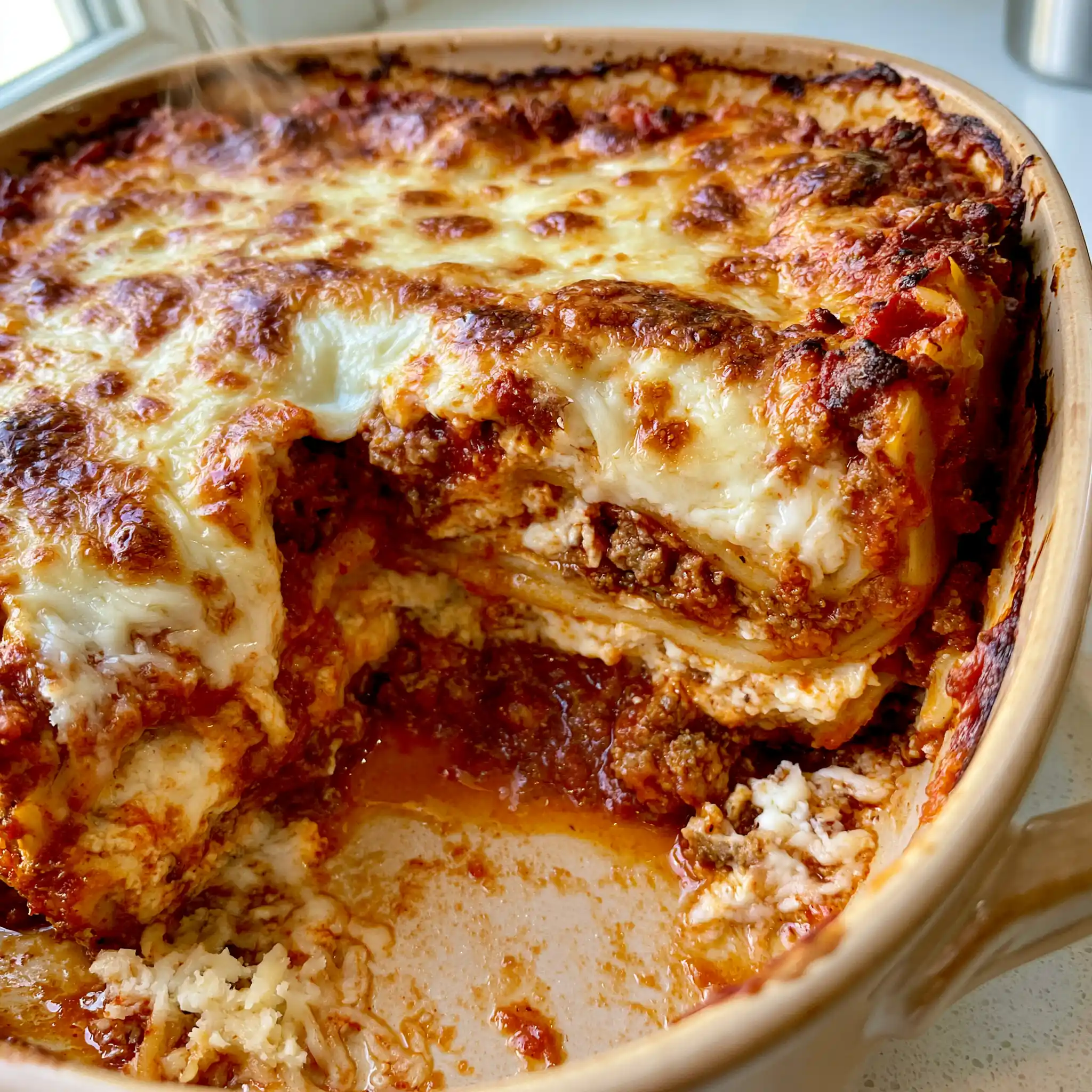
Easy Homemade Lasagna with Meat Sauce
Tender lasagna noodles layered with a rich homemade beef sauce, creamy ricotta filling, Parmesan and plenty of melted mozzarella.
The Quick Answer
Brown the beef with onion and garlic, cook the tomato paste briefly, then simmer the tomatoes and seasonings until thick. Boil the noodles just until al dente and mix ricotta with egg, Parmesan, parsley, salt and pepper. Layer sauce, noodles, ricotta, mozzarella and more sauce in a 9 × 13-inch dish. Bake covered at 375°F (190°C) for about 30 minutes, uncover and bake another 20 to 25 minutes, then rest 15 minutes before slicing.
Easy Homemade Lasagna with Meat Sauce is the kind of comforting dinner that brings everyone to the table. Layers of tender lasagna noodles, rich homemade meat sauce, creamy ricotta filling and plenty of melted mozzarella come together in one warm, satisfying casserole.
This homemade lasagna has everything you want from a classic family meal: deeply savory tomato sauce, flavorful ground beef, creamy cheese between every layer and a golden bubbling top straight from the oven.
Although lasagna can look complicated, this version keeps the process simple. The meat sauce can simmer while the pasta cooks, the ricotta filling takes only a few minutes to mix, and assembly becomes straightforward once each component is ready.
It works beautifully for Sunday dinner, family gatherings, meal prep, holidays or any evening when you want a comforting homemade meal that can feed several people.
“The best homemade lasagna is not about adding dozens of ingredients. A flavorful meat sauce, balanced cheese filling, and well-built layers are what make every slice satisfying.”
— Solivia
Why You’ll Love This Homemade Lasagna
- A rich homemade beef and tomato sauce with onion, garlic and herbs.
- Creamy ricotta, Parmesan and mozzarella in balanced layers.
- Familiar family-friendly Italian-American flavors.
- Easy to assemble once the components are prepared.
- Excellent for make-ahead dinners and meal prep.
- One 9 × 13-inch dish gives about eight generous servings.
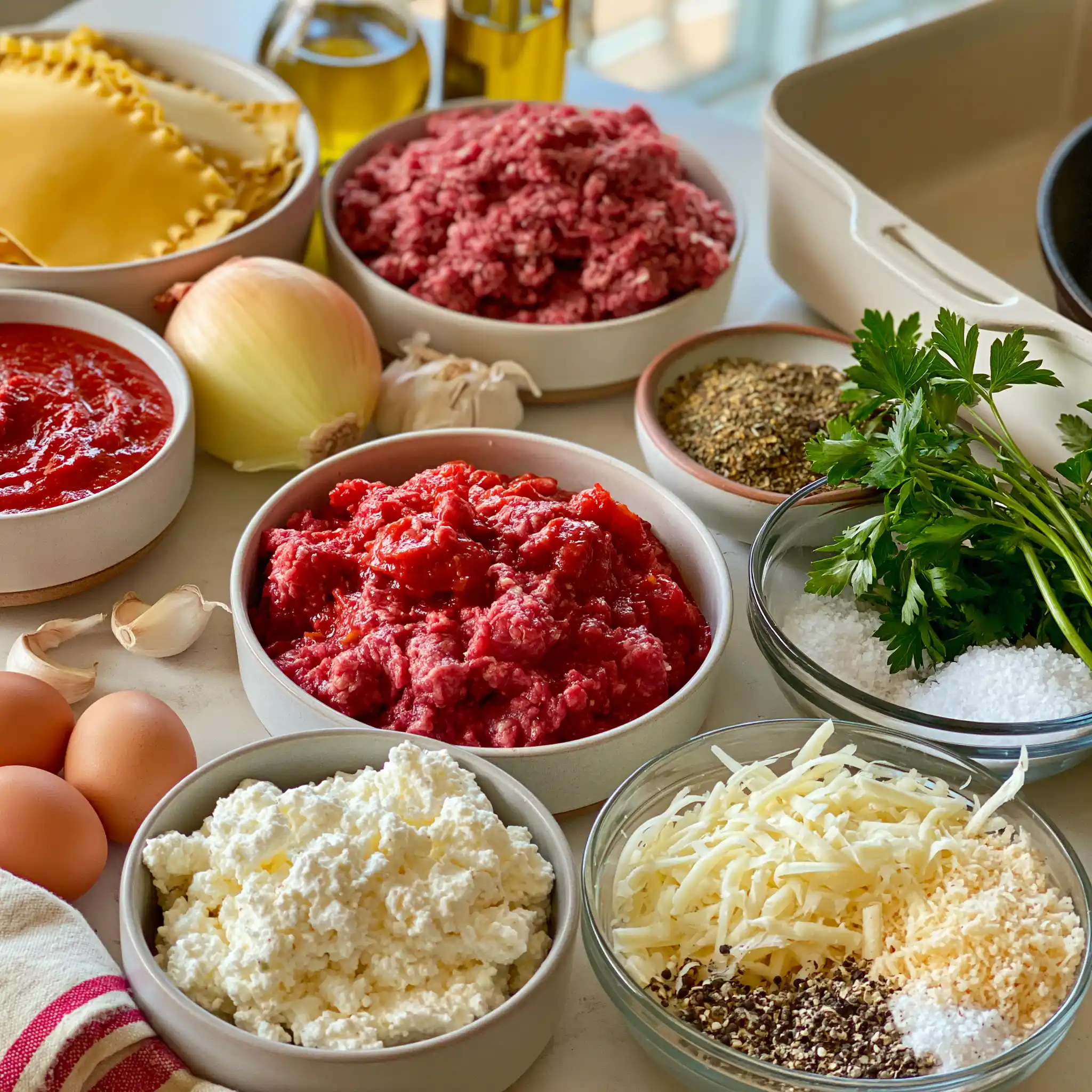
Ingredients for Easy Homemade Lasagna with Meat Sauce
For the Homemade Meat Sauce
- 1 tablespoon olive oil
- 1 pound ground beef
- 1 medium yellow onion, finely chopped
- 3 garlic cloves, minced
- 1 can (28 ounces) crushed tomatoes
- 1 can (15 ounces) tomato sauce
- 2 tablespoons tomato paste
- 1 teaspoon dried oregano
- 1 teaspoon dried basil
- ½ teaspoon Italian seasoning
- ½ teaspoon salt
- ¼ teaspoon ground black pepper
- 1 teaspoon sugar, optional
- 2 tablespoons chopped fresh parsley, optional
For the Lasagna Layers
- 12 lasagna noodles
- 15 ounces ricotta cheese
- 1 large egg
- ½ cup grated Parmesan cheese
- 2 tablespoons chopped fresh parsley
- ¼ teaspoon salt
- ¼ teaspoon ground black pepper
- 3 cups shredded mozzarella cheese
Useful extra: cook one or two additional noodles if you have them available. They are handy if one tears during boiling.
Ingredient Notes and Easy Substitutions
Ground Beef
An 85% to 90% lean ground beef gives the sauce enough richness without leaving it excessively greasy. Drain excess fat when necessary. You can also replace part of the beef with Italian sausage.
Ricotta
Whole-milk ricotta gives the creamiest result, while part-skim also works well. If the ricotta looks watery, drain it briefly before mixing the filling.
Cottage Cheese
Cottage cheese can replace ricotta. For a smoother texture, pulse it briefly before combining it with egg and Parmesan.
Mozzarella
Low-moisture mozzarella is ideal because it melts well without adding too much water. Fresh mozzarella must be drained and patted dry.
Parmesan
Freshly grated Parmesan gives stronger flavor. Parmigiano-Reggiano or Grana Padano can also be used.
Lasagna Noodles
Traditional dried noodles should be cooked only until al dente. Oven-ready noodles can work too, but sauce quantity and baking time may need adjustment according to the package.
What Makes a Good Lasagna Meat Sauce?
Brown the Beef Properly
Give the meat time to contact the hot pan instead of stirring constantly. Browning creates deeper savory flavor.
Cook the Tomato Paste
Stir tomato paste into the beef and onions for about one minute before adding canned tomatoes. This develops its flavor and removes the raw edge.
Let the Sauce Simmer
A gentle uncovered simmer lets excess moisture evaporate. The final sauce should be rich and thick but still easy to spread.
Lasagna sauce needs enough moisture to keep the pasta tender but should never look watery. If the sauce is too loose before assembly, it can collect at the bottom of the dish and make clean slices difficult.
The Best Cheese Mixture for Homemade Lasagna
The creamy layer combines ricotta, Parmesan, egg, parsley, salt and black pepper. The egg helps the ricotta filling hold together after baking, Parmesan brings savory flavor and ricotta keeps the layers soft and creamy.
Mix only until combined. There is no need to whip the filling heavily, and keep the mozzarella separate so it can be distributed between the layers.
Do You Have to Boil Lasagna Noodles First?
For this version, yes. Cook traditional dried lasagna noodles in plenty of salted water until they are flexible but still slightly firm in the center. They continue to soften in the oven.
After draining, lay the noodles flat on parchment paper, a lightly greased baking sheet or clean kitchen towels. Keeping them separated prevents sticking and tearing while the remaining components are prepared.
Easy Homemade Lasagna at a Glance
| Recipe Detail | Information |
|---|---|
| Preparation Time | 30 minutes |
| Cooking Time | 55 minutes |
| Resting Time | 15 minutes |
| Total Time | About 1 hour 40 minutes |
| Servings | 8 |
| Difficulty | Easy |
| Cuisine | Italian-American |
| Course | Main Dish |
| Baking Dish | 9 × 13 inches |
| Oven | 375°F / 190°C |
How to Make Easy Homemade Lasagna with Meat Sauce
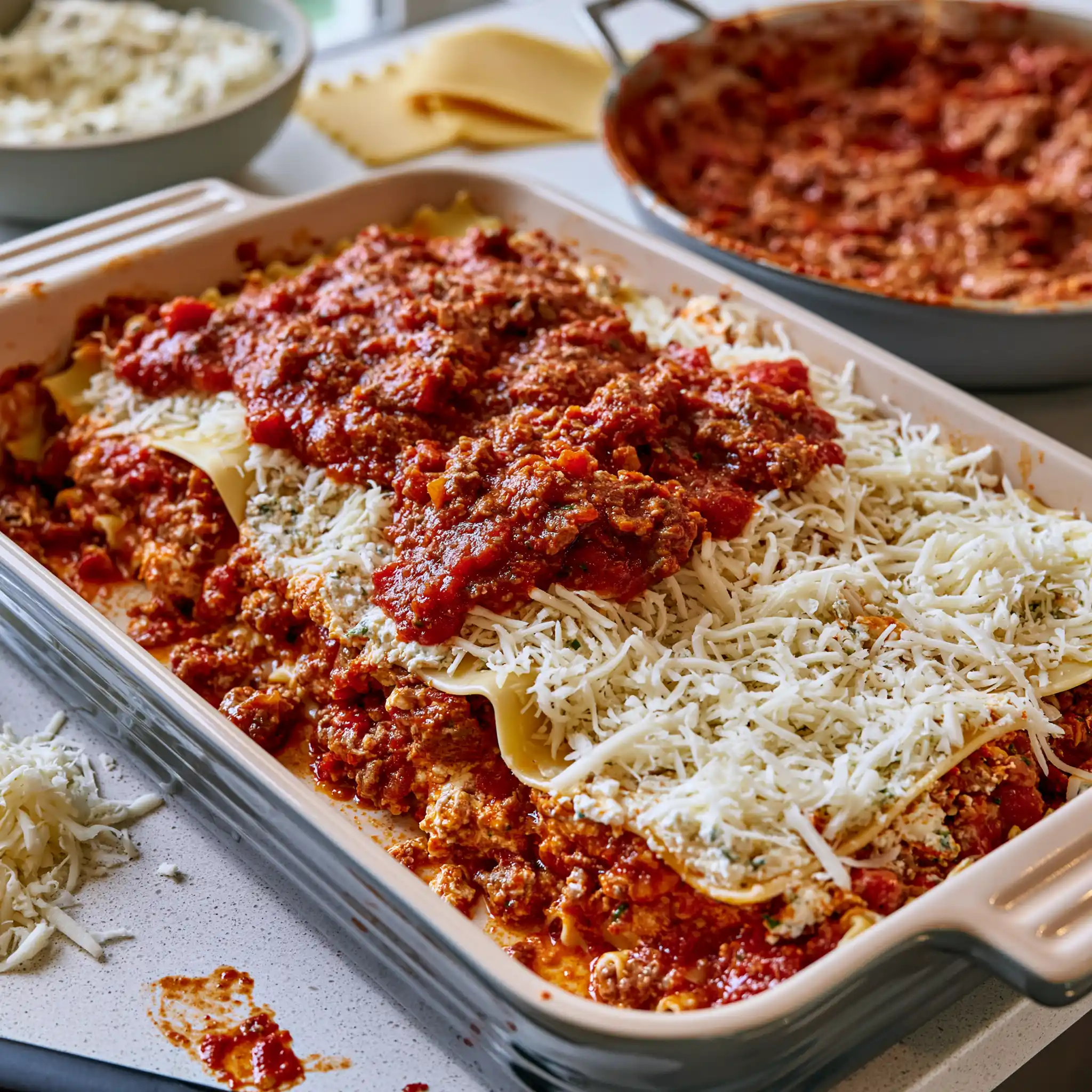
Brown the Ground Beef
Heat the olive oil in a large skillet or Dutch oven over medium-high heat. Add the ground beef and break it into small pieces. Cook about 5 to 7 minutes, stirring occasionally, until browned and no longer pink. Drain excess fat if necessary.
Cook the Onion and Garlic
Add the chopped onion and cook about 3 to 4 minutes until softened. Add the minced garlic and cook another 30 seconds, stirring so it becomes fragrant without burning.
Cook the Tomato Paste
Stir the tomato paste directly into the beef and onion mixture and cook for about one minute. This short step concentrates the tomato flavor.
Make the Meat Sauce
Add crushed tomatoes, tomato sauce, oregano, basil, Italian seasoning, salt, pepper and optional sugar. Bring to a gentle simmer, reduce the heat and cook uncovered for 20 to 25 minutes, stirring occasionally. The sauce should be thick but spreadable.
Cook the Lasagna Noodles
While the sauce simmers, boil the noodles in salted water according to the package until just al dente. Drain carefully and lay them flat so they do not stick together.
Mix the Ricotta Filling
Combine ricotta, egg, Parmesan, parsley, salt and black pepper in a medium bowl. Stir until evenly combined and creamy.
Preheat and Prepare the Dish
Preheat the oven to 375°F (190°C). Lightly grease a 9 × 13-inch baking dish and arrange the sauce, noodles, ricotta mixture and mozzarella close to your work surface.
Start with Meat Sauce
Spread about 1 cup of meat sauce over the bottom of the dish. Cover the entire surface with a thin layer so the first noodles stay moist and do not stick.
Add Noodles and Ricotta
Place 3 to 4 cooked noodles over the sauce, overlapping slightly if needed. Spread about one-third of the ricotta mixture gently over the noodles.
Add Mozzarella and More Sauce
Sprinkle about ¾ cup shredded mozzarella over the ricotta, then spoon another layer of meat sauce over the cheese.
Repeat the Layers
Continue with noodles, ricotta, mozzarella and meat sauce until you have about three full noodle layers. Finish with noodles, cover them completely with the remaining sauce and add the remaining mozzarella. Add a little extra Parmesan if desired.
Bake Covered
Cover loosely with foil. Lightly grease the underside if needed so the cheese does not stick. Bake for about 30 minutes.
Finish Uncovered
Remove the foil and bake another 20 to 25 minutes, until the edges are bubbling, the cheese is melted and the center is hot. Broil 1 to 2 minutes only if you want deeper golden spots.
Rest Before Slicing
Let the lasagna rest for about 15 minutes. This gives the sauce and cheese time to settle so the layers hold together much better when cut.
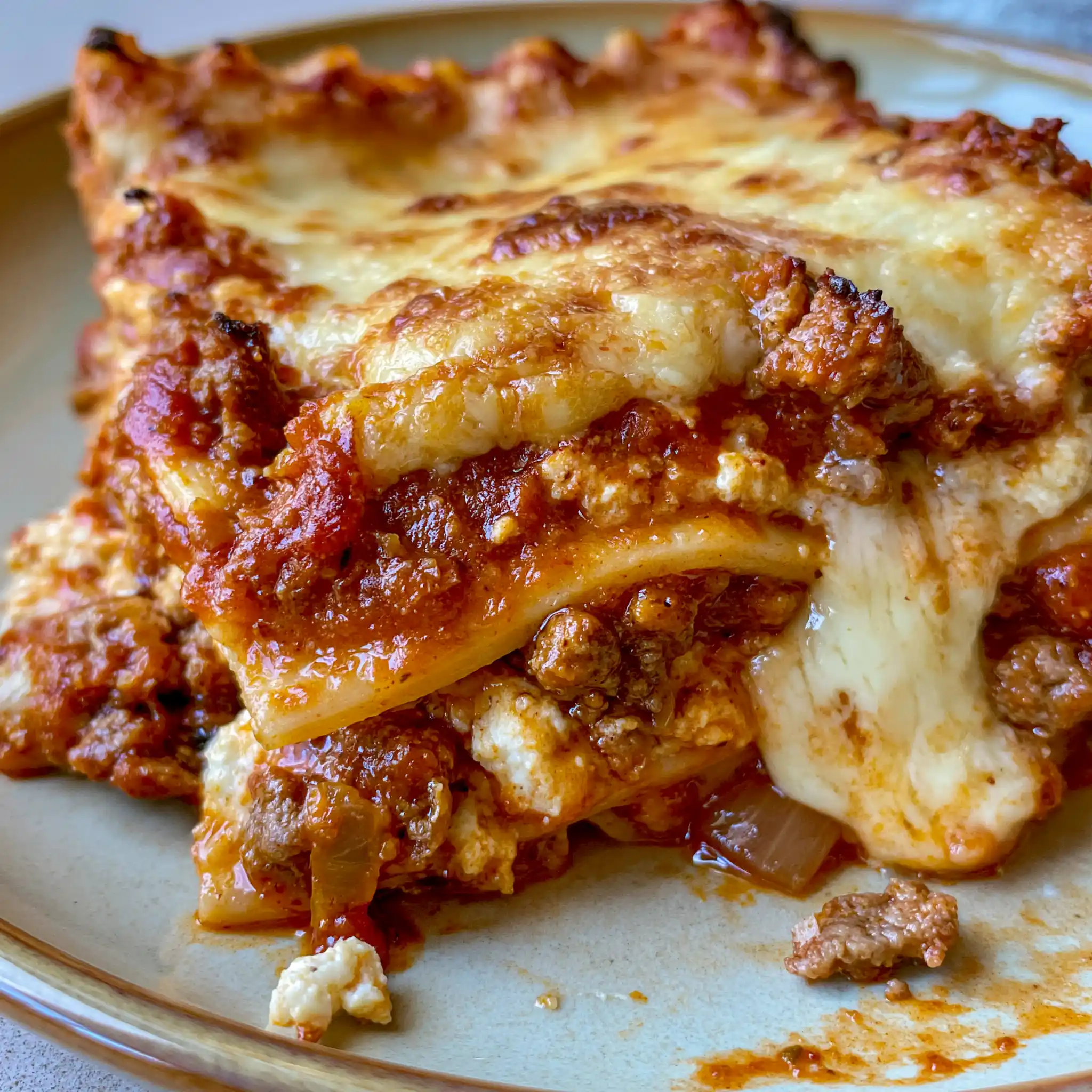
Why You Should Let Lasagna Rest Before Cutting
One of the most important steps happens after the pan comes out of the oven. Freshly baked lasagna contains very hot sauce and melted cheese, so cutting immediately can cause the layers to slide apart.
A 15-minute rest allows the cheese and sauce to settle while the lasagna stays warm. Use a sharp knife to cut squares or rectangles and slide a thin spatula underneath each portion. For eight generous servings, divide the dish into two rows lengthwise and four sections across.
How to Prevent Watery Lasagna
Thicken the Sauce
Simmer the meat sauce long enough for excess moisture to evaporate before you start layering.
Drain Watery Ricotta
If your ricotta contains a lot of liquid, let it drain briefly in a fine-mesh strainer.
Keep Pasta Al Dente
Overcooked noodles become very soft and do not handle the additional oven time as well.
Use Low-Moisture Mozzarella
Fresh mozzarella can release much more water, so drain and dry it carefully if you use it.
Cook Vegetables First
For spinach, mushrooms, zucchini or other additions, remove excess moisture before layering.
Let It Rest
Even a properly cooked lasagna looks loose immediately after baking. Resting gives the layers time to stabilize.
Tips for the Best Homemade Lasagna
Season Every Component
Season the pasta water, meat sauce and ricotta filling so flavor is balanced throughout the dish.
Keep Layers Balanced
Several even layers give better texture than one extremely thick layer of meat or cheese.
Cover the Pasta
Exposed noodle edges can dry out. Make sure the top noodles are fully covered with sauce before adding mozzarella.
Make Enough Sauce
The noodles absorb some moisture in the oven, so a generous but thick meat sauce keeps the finished lasagna tender.
Use Low-Moisture Mozzarella
It melts evenly and helps prevent excess water from collecting between the layers.
Rest Before Serving
Those extra minutes improve both presentation and texture without making the lasagna cold.
Common Homemade Lasagna Mistakes
How to Know When Lasagna Is Done
The sauce should be bubbling around the sides, the cheese should be fully melted with light golden spots and the middle should be very hot. Insert a knife into the center to check that the noodles feel tender.
Food-safety note: cook ground beef to a safe minimum internal temperature of 160°F (71°C), measured with a food thermometer. For leftovers, USDA recommends reheating to 165°F (74°C).
Easy Homemade Lasagna Variations
Italian Sausage
Replace half the ground beef with mild or spicy Italian sausage for a richer, more seasoned meat sauce.
Beef and Sausage
Use ½ pound ground beef and ½ pound Italian sausage for extra complexity without changing the layering method.
Three-Cheese
Add a moderate amount of provolone, fontina, Asiago or Pecorino Romano to the ricotta, mozzarella and Parmesan combination.
Spinach
Add cooked spinach to the ricotta mixture. Thaw frozen spinach completely and squeeze out as much moisture as possible.
Mushroom Meat Lasagna
Cook sliced mushrooms after browning the beef and let their moisture evaporate before adding the tomatoes.
Vegetable-Loaded
Add finely chopped zucchini, carrots, bell peppers, mushrooms or spinach, cooking them thoroughly before the tomatoes.
Spicy version: add crushed red pepper flakes or hot Italian sausage. A small amount of Pepper Jack can also be mixed with the mozzarella if you want more heat.
What to Serve with Homemade Lasagna
Garlic Bread
Crisp bread is perfect for scooping up extra meat sauce from the plate.
Simple Green Salad
Lettuce, cucumber, tomatoes, red onion and a bright Italian-style vinaigrette balance the rich pasta and cheese.
Caesar Salad
Crisp romaine, Parmesan and croutons make a familiar restaurant-style side.
Roasted Vegetables
Broccoli, zucchini, asparagus, green beans or Brussels sprouts work well with simple olive oil and garlic seasoning.
Make Ahead, Freezing, Storage and Reheating
Assemble Earlier the Same Day
Prepare the meat sauce, noodles, ricotta mixture and layers as directed. Cover the baking dish tightly and refrigerate until ready to bake. A cold lasagna may need roughly 10 additional minutes in the oven; keep it covered during most of that extra time.
Prepare It the Night Before
You can assemble the full lasagna the night before and refrigerate it. Remove it while the oven preheats. If you use glass bakeware, follow the manufacturer’s temperature-change guidance rather than moving a very cold dish directly into extreme heat.
Freeze Before or After Baking
Lasagna freezes well either unbaked or fully cooked. For an unbaked lasagna, cool cooked components before assembly and use a freezer-safe dish. For baked lasagna, cool completely and freeze the whole dish or individual portions.
How Long to Freeze
For the best flavor and texture, use frozen lasagna within about 2 to 3 months. Label the container with the recipe name and freezing date.
Refrigerator Storage
Cool leftovers promptly and refrigerate them in airtight containers. USDA guidance recommends using cooked leftovers within 3 to 4 days.
Oven Reheating
Heat covered at 350°F until hot in the center. Add a spoonful of meat sauce or a few drops of water around dry edges if needed, then uncover briefly at the end if you want the cheese to crisp again.
Microwave and Air Fryer
For one serving, microwave in short intervals until hot throughout. Individual slices can also be reheated in an air-fryer-safe dish at a moderate temperature. Covering during the first stage can help prevent the top from browning before the center is hot.
Estimated Nutrition Information
Nutrition varies with the ground beef, mozzarella, ricotta, noodles, Parmesan and portion size. The values below come from the estimate supplied with the recipe and are intentionally not added as fixed nutrition claims in the structured Recipe data.
| Nutrition | Approximate Amount per Serving |
|---|---|
| Calories | 520–600 kcal |
| Protein | 32–38 g |
| Carbohydrates | 40–48 g |
| Fat | 24–30 g |
| Fiber | 4–6 g |
| Sodium | 800–1,050 mg |
Easy Homemade Lasagna with Meat Sauce
Rich beef and tomato sauce, tender noodles, creamy ricotta and melted mozzarella in comforting family-style layers.
30 min Cook
55 min Rest
15 min Total
~1 h 40 Servings
8
Ingredients
- 1 tbsp olive oil
- 1 lb ground beef
- 1 medium yellow onion
- 3 garlic cloves
- 28 oz crushed tomatoes
- 15 oz tomato sauce
- 2 tbsp tomato paste
- 1 tsp dried oregano
- 1 tsp dried basil
- ½ tsp Italian seasoning
- Salt and black pepper
- 1 tsp sugar, optional
- 12 lasagna noodles
- 15 oz ricotta
- 1 large egg
- ½ cup Parmesan
- 2 tbsp parsley
- 3 cups shredded mozzarella
Instructions
- Brown the ground beef in olive oil for 5 to 7 minutes.
- Add onion; cook 3 to 4 minutes, then garlic for 30 seconds.
- Cook tomato paste for 1 minute.
- Add tomatoes and seasonings; simmer 20 to 25 minutes until thick.
- Boil lasagna noodles until just al dente and lay them flat.
- Mix ricotta, egg, Parmesan, parsley, salt and pepper.
- Heat oven to 375°F (190°C) and grease a 9 × 13-inch dish.
- Layer sauce, noodles, ricotta, mozzarella and more sauce.
- Repeat for about three noodle layers; finish with sauce and mozzarella.
- Cover and bake 30 minutes.
- Uncover and bake another 20 to 25 minutes.
- Rest 15 minutes before slicing.
Common Questions About Easy Homemade Lasagna
Can I use jarred pasta sauce?
Yes. Brown the beef with onion and garlic, drain excess grease, then add a thick jarred pasta sauce and simmer briefly so the flavors combine.
Can I use no-boil lasagna noodles?
Yes. Oven-ready noodles absorb moisture while baking, so make sure every layer has enough sauce and follow the package instructions for liquid and baking time.
Can I use cottage cheese instead of ricotta?
Yes. Drain excess liquid if necessary. For a smoother texture, blend or process it briefly before mixing it with egg and Parmesan.
Can I make lasagna without eggs?
Yes. The egg helps the ricotta filling hold its shape, but the recipe can be made without it. The cheese layer may remain a little softer.
Can I make lasagna without ricotta?
Yes. Cottage cheese, a béchamel-style sauce or another creamy cheese filling can be used. The texture and flavor will change, but the layering method stays the same.
Why is my lasagna watery?
Common causes include thin meat sauce, watery ricotta, wet fresh mozzarella, vegetables that were not cooked before layering or cutting the lasagna too soon.
Why is my lasagna dry?
There may not be enough sauce, the noodles may be exposed or the dish may have baked uncovered for too long. Cover the top during the first part of baking and make sure every noodle layer receives sauce.
Why does my lasagna fall apart?
The most common reason is slicing immediately after baking. Rest for about 15 minutes. A watery sauce or excessively thick cheese layers can also make portions unstable.
How many layers should lasagna have?
About three main noodle layers work very well in a standard 9 × 13-inch dish. Balanced layers matter more than creating the maximum possible number.
Should the final layer be noodles or meat sauce?
The final pasta layer should be fully covered with meat sauce and mozzarella. Leaving noodles exposed can make them hard or dry.
Can I prepare the meat sauce in advance?
Yes. Cook it ahead, cool it and refrigerate it in an airtight container. This can make assembly much faster on the day you serve the lasagna.
Can I assemble lasagna the night before?
Yes. Assemble, cover and refrigerate overnight. A cold lasagna normally needs a little additional baking time compared with a freshly assembled one.
Can homemade lasagna be frozen?
Yes. Freeze it either before or after baking. For convenient reheating, baked lasagna can be cooled, portioned and frozen as individual slices.
A Word From Solivia
Homemade lasagna is one of those recipes that looks impressive on the table but becomes surprisingly simple once you understand the basic order.
The most important part is preparing each component properly before assembly. A thick meat sauce prevents watery layers. Slightly firm noodles keep their texture in the oven. A balanced ricotta filling brings creaminess without overpowering the sauce, and mozzarella gives every slice that familiar cheesy finish.
I also recommend giving the finished lasagna enough time to rest. Those extra few minutes can make the difference between layers that immediately slide apart and beautiful slices that hold together on the plate.
Once you are comfortable with the basic recipe, lasagna is incredibly easy to customize with vegetables, sausage, spinach, different cheeses or whatever ingredients your family enjoys.
— Solivia, Main Dish Specialist at RimRaam
Food-Safety Source
For ground beef, USDA Food Safety and Inspection Service recommends a safe minimum internal temperature of 160°F (71°C) measured with a food thermometer. USDA also recommends using cooked leftovers within 3 to 4 days in the refrigerator and reheating leftovers to 165°F (74°C). See the official USDA safe temperature chart and USDA leftovers guidance.
Make This Homemade Lasagna
Save this easy lasagna for a cozy family dinner, then tell us whether you kept the classic beef-and-ricotta version or added sausage, spinach, mushrooms or another favorite twist.
View the Printable Recipe